


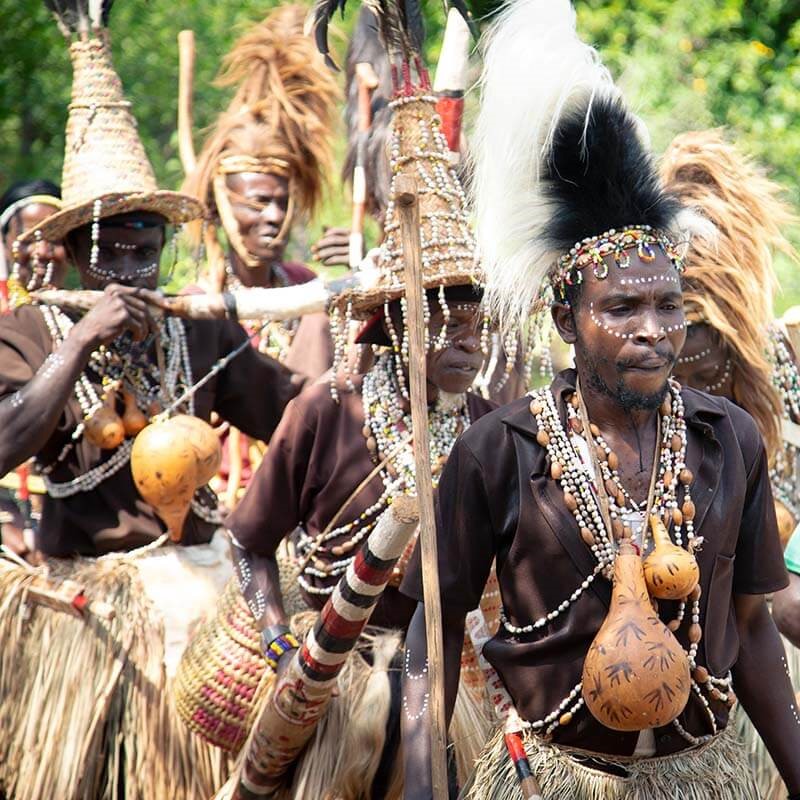
Mon nom est Simon Mitambo, et je suis né et j'ai grandi sur les pentes sacrées du mont Kenya. Je viens de la communauté de Tharaka, et mon village est assis sur les rives de la rivière Mutonga, un lieu d'importance spirituelle pour mon peuple. Enfant, j'étais profondément lié à ces gens, à cet endroit et aux pratiques traditionnelles qui nous lient. J'ai passé ma jeunesse à m'occuper du pâturage des animaux dans les contreforts, à jouer dans l'eau et à vivre en harmonie avec notre communauté humaine et plus que humaine. J'ai appris les lois de cette planète vivante et comment ils soutiennent tous les êtres lorsqu'ils sont observés et maintenus.
"Les lois de cette planète vivante soutiennent tous les êtres lorsqu'elles sont observées et maintenues."
Comme beaucoup de ma génération, l'éducation formelle m'a arraché ces racines profondes. Ma scolarité m'a déconnecté de ma culture, de mes terres et de mes eaux. Ça a coûté cher. À mesure que j'avançais à l'école, on m'a enseigné les systèmes de connaissances industrielles et laissé derrière moi la richesse de la sagesse enracinée dans nos modes de vie traditionnels. Ce processus d'oubli a été vécu par tant d'entre nous que ma communauté a commencé à s'effondrer. C'était déchirant.
Cependant, un processus d'apprentissage alternatif – La Fondation Gaia Formations Pour la Transformation – m'ouvrit les yeux aux communautés de l'Amazonie colombienne qui se rappelaient leur histoire d'origine. Ces peuples sont retournés dans leur forêt tropicale ancestrale, ont relancé leurs connaissances autochtones et ont restauré leurs propres systèmes éducatifs. Par la suite, les terres ont été délimitées comme les leurs, et ils sont sur le chemin d'être reconnus comme le gouvernement local des 18 millions d'hectares qu'ils appellent la maison, qu'ils gèrent encore aujourd'hui. Je me suis rendu compte que c'était de l'information qui valait la peine de rentrer chez moi.
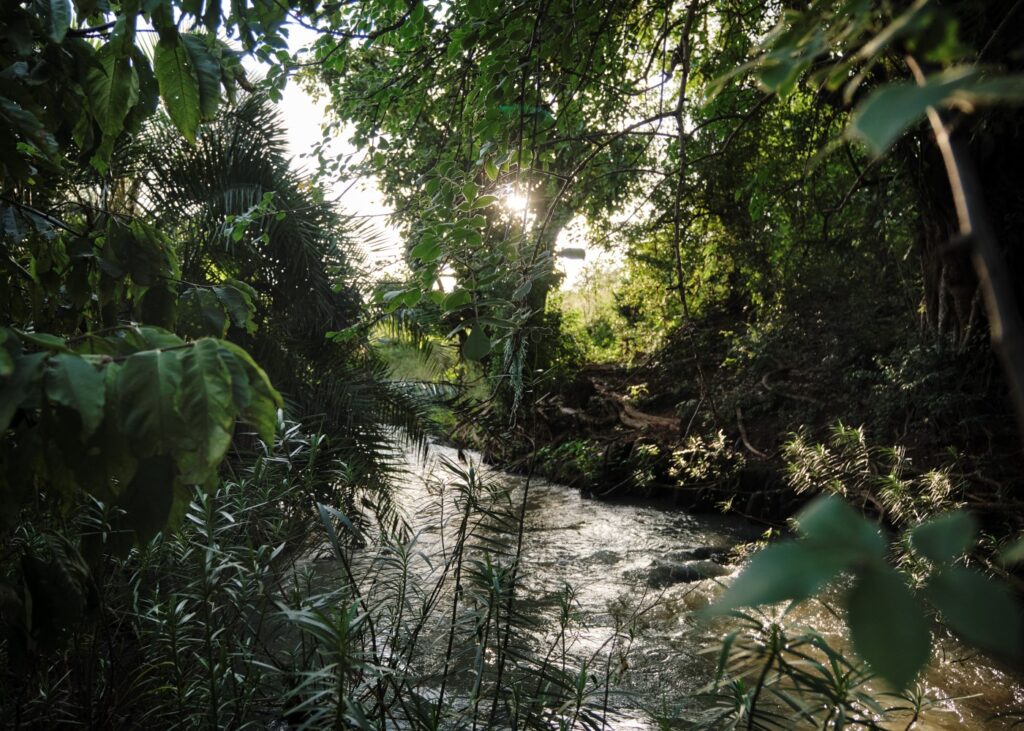
De retour dans ma communauté avec cette histoire a marqué le début d'un voyage de transformation. J'ai commencé à comprendre que notre sagesse centrée sur la terre pourrait nous aider à relever les défis actuels, comme la perte de biodiversité, l'injustice sociale et même le changement climatique. Mon peuple et ma maison avaient souffert pour le soi-disant développement et étaient devenus « pauvres », mais maintenant je savais que nous avions tout ce dont nous avions besoin pour retrouver notre richesse bioculturelle.
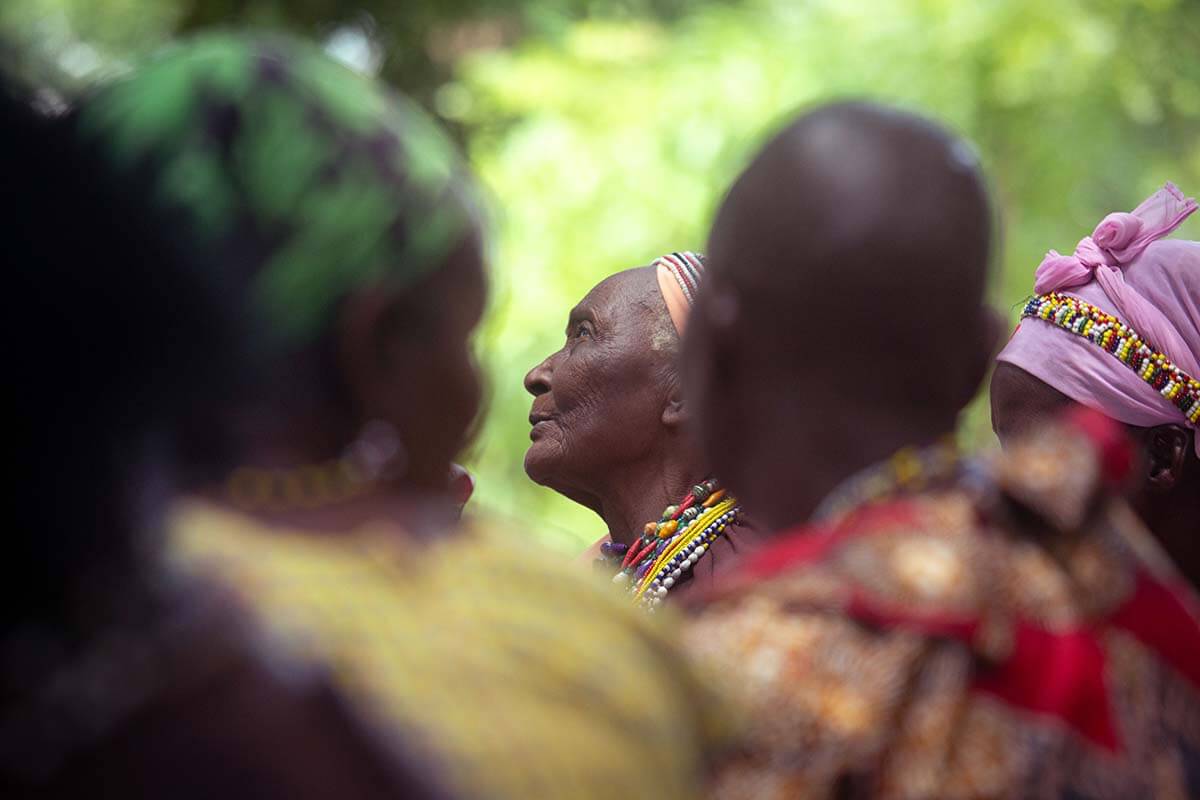
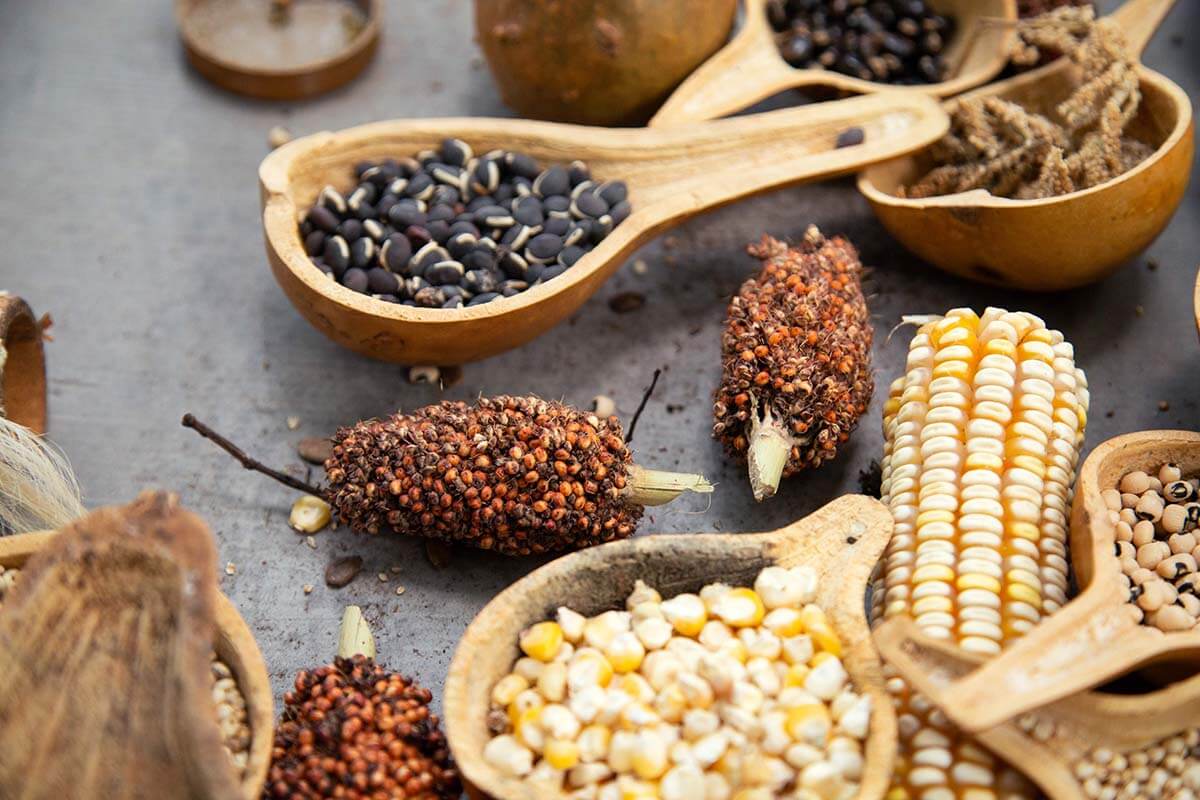
Ce voyage a commencé par s'engager Anciens. Plus nos dialogues sont profonds, plus ils se souviennent. Ainsi, nous avons uni toute la communauté — les vieux et les jeunes — en revenant sur les nombreux aspects de notre vie. Par exemple, Anciens nous a menés à cartographier les calendriers saisonniers, tandis que nos gardiennes de semences ont relancé l'utilisation des variétés de cultures locales. Habituellement, mon peuple a planté des cultures basées sur des types spécifiques de pluie qui sont tombés à certains moments de l'année. Reviver ces connaissances traditionnelles a considérablement amélioré l'abondance agricole, et nous avons maintenant assez à manger. En regagnant notre souveraineté alimentaire et en ne vendant pas ce que nous cultivons, nous avons également maintenu notre autonomie sur notre sécurité nutritionnelle, même lorsque les chaînes d'approvisionnement internationales sont perturbées, comme cela s'est produit pendant la pandémie de COVID-19.
« Revivifier les connaissances traditionnelles a considérablement amélioré l'abondance agricole, et nous avons maintenant assez à manger. »
Nous avons également réintégré les prévisions météorologiques traditionnelles dans notre planification. Contrairement aux prévisions météorologiques nationales, nos méthodes sont localisées et spécifiques. En observant la nature, comme le comportement des abeilles ou la direction du vent, les gens de Tharaka peuvent faire des prédictions précises et mieux se préparer. Cette puissante compétence de « lecture » de la terre, de l'eau et du ciel nous donne la résilience face à des modèles météorologiques de plus en plus chaotiques.
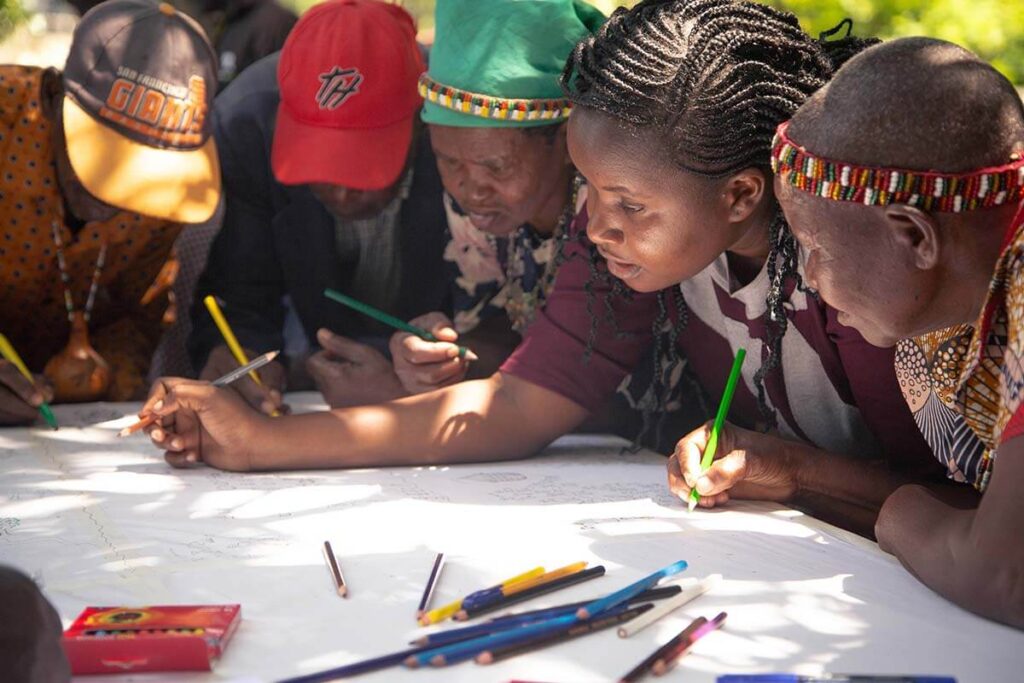
Un autre aspect important de notre travail consiste à revitaliser l'artisanat traditionnel. Les femmes sont de retour au tissage, au perlage et à la confection de robes, tandis que les hommes se concentrent sur la vannerie et la création de calabashes à partir desquels manger et boire. Non seulement ces métiers préservent notre identité culturelle et nous fournissent des ustensiles, des vêtements et des bijoux, mais ils génèrent aussi des revenus supplémentaires pour les familles.
« Nous protégeons la richesse et la résilience de notre culture, de notre spiritualité et de notre écologie.
Au-delà de nos champs et maisons, nous rétablissons notre Sites Naturels Sacrés, les cœurs battants de mon peuple et cet endroit. Ils sont là où nous effectuons des rituels pour rétablir l'équilibre entre les humains, la nature et les ancêtres, et ils sont aussi des points chauds de la biodiversité, ayant été protégés depuis des temps immémoriaux. Comme les systèmes de surveillance de la vie, leur état actuel offre un aperçu de l'évolution de notre environnement et de la force de notre esprit. En protégeant ces lieux par la gouvernance coutumière et en enseignant à la prochaine génération de faire de même, nous protégeons la richesse et la résilience de notre culture, de notre spiritualité et de notre écologie.
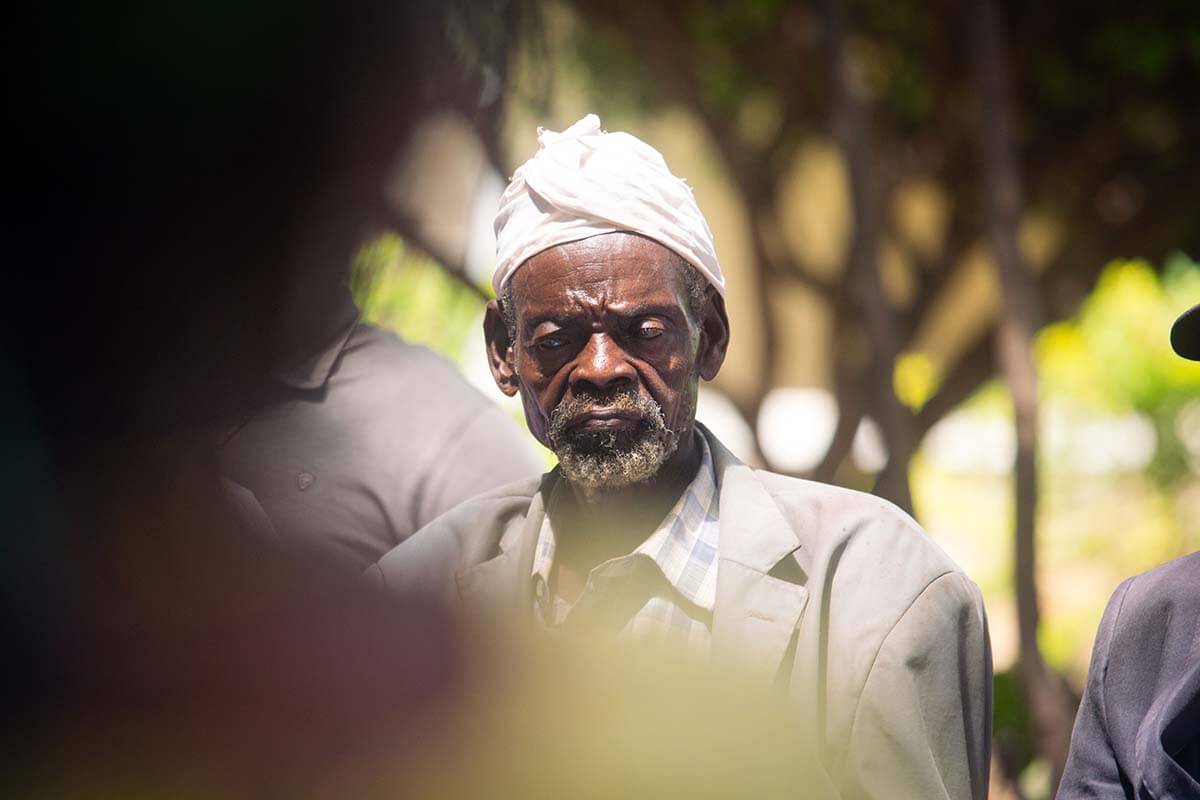
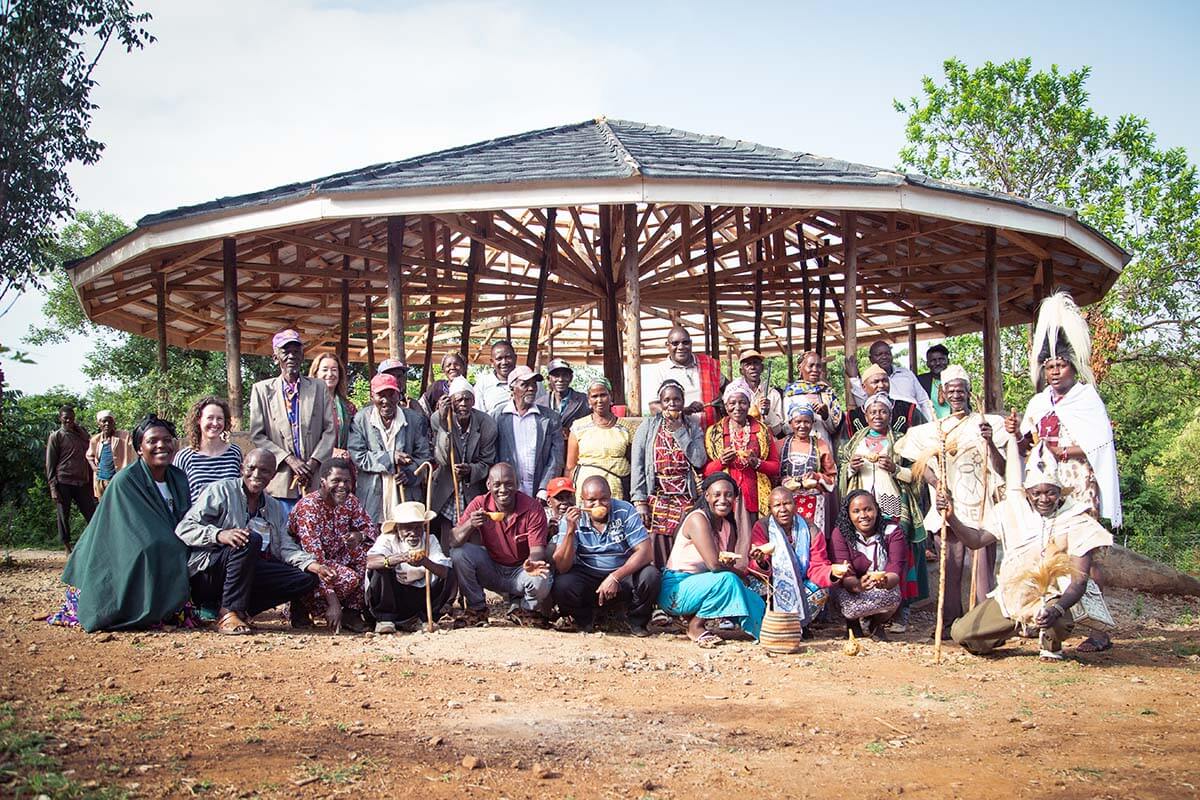
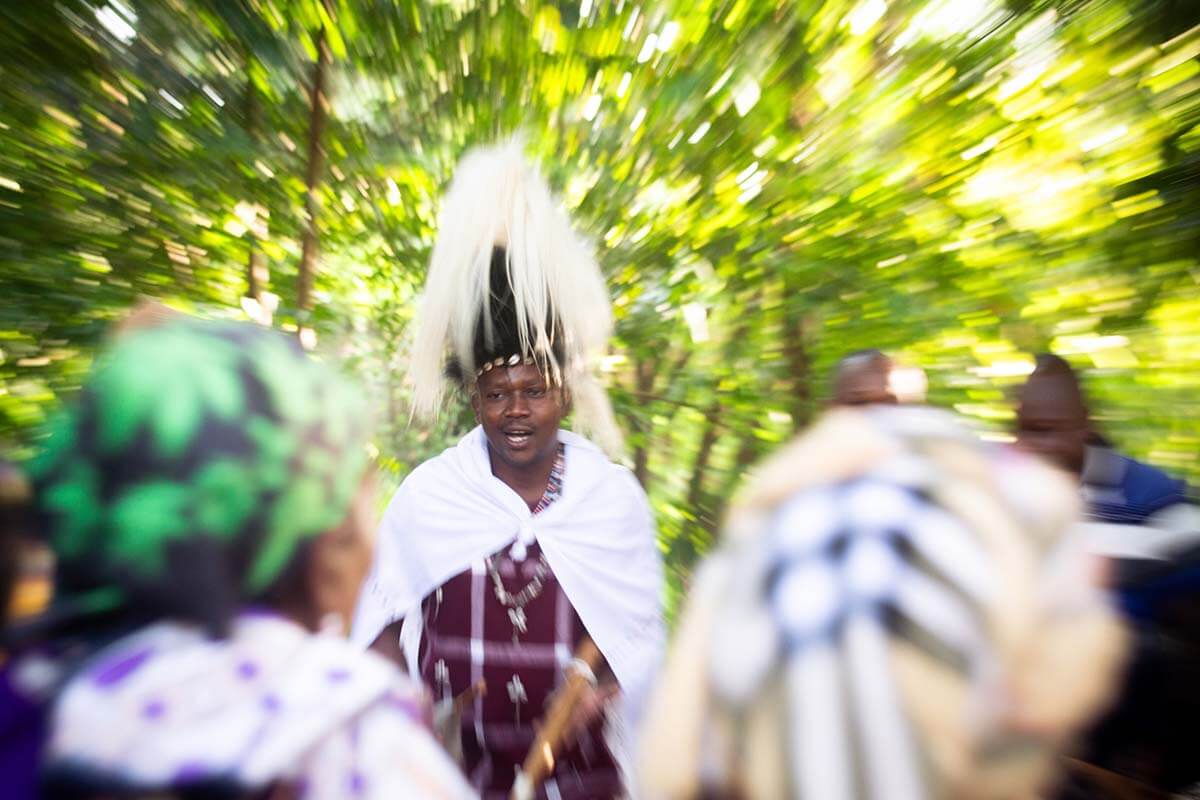
Alors que nous travaillons à relancer notre Sites Naturels Sacrés, nous prenons également des mesures pour renforcer la gouvernance traditionnelle. La pierre angulaire de ma communauté a toujours été le Gaaru. Ce lieu de réunion spécial, situé près d'un site naturel sacré, sert de lieu d'enseignement, de rites d'initiation pour les jeunes et de conseils de Anciens, ainsi que de représenter un centre de cohésion communautaire.
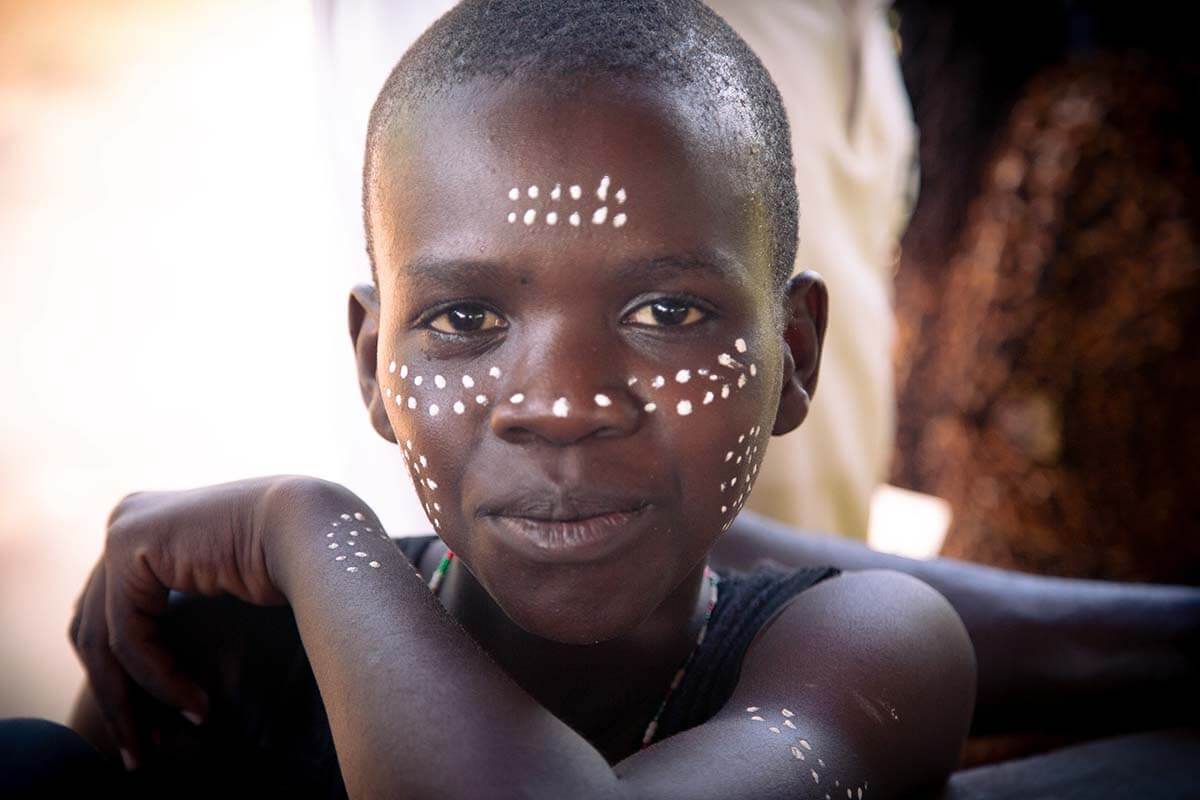
Nous avons dû reconstruire le Gaaru et son importance. Nos structures, tant physiques que théoriques, s'étaient brisées, nous laissant fracturés. Maintenant, le Gaaru est où les jeunes apprennent les lois coutumières de la terre pendant leurs rites de passage. Les Anciens les guider dans la compréhension de la façon de prendre soin du territoire, tout comme j'ai vécu grandir. Le Gaaru veille à ce que cette gouvernance repose sur nos valeurs culturelles de respect et d'amour pour la Terre Mère. Il apporte clarté, fournissant un cadre pratique imprégné de tradition et capable de répondre aux nouveaux défis d'une racine stable.
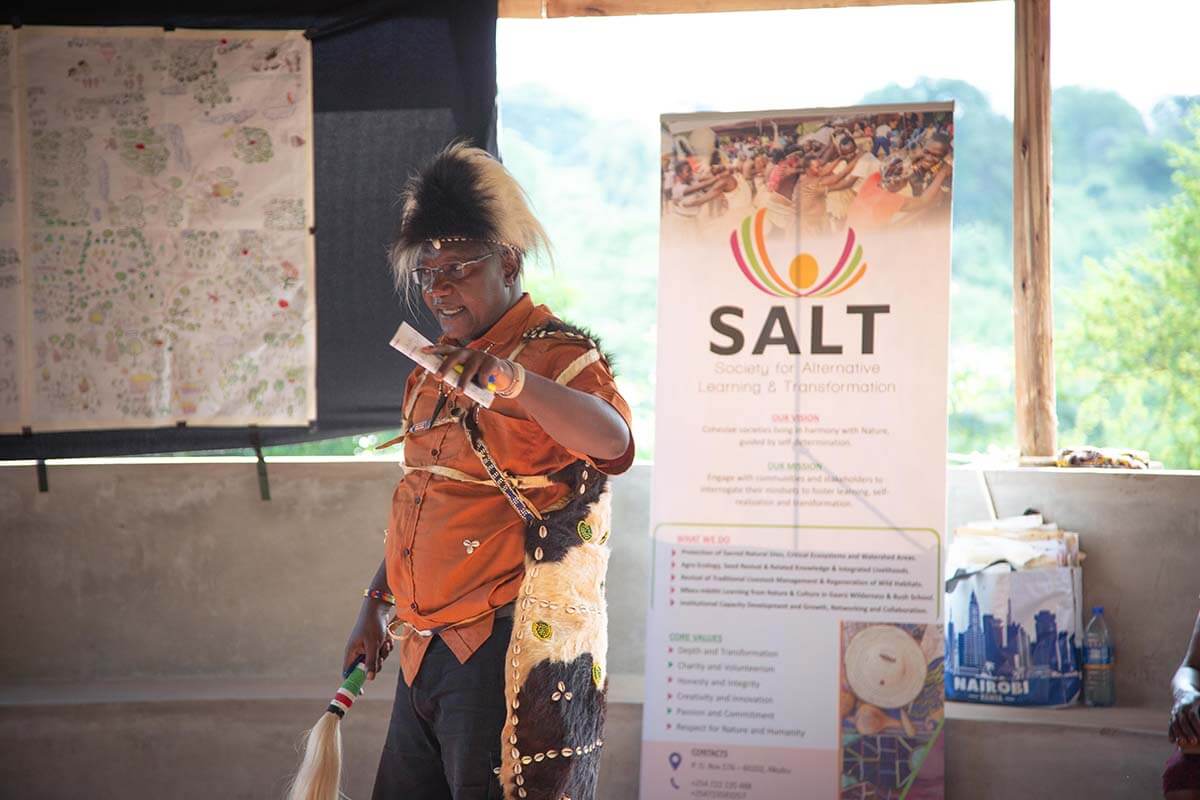
En 2013, j'ai cofondé la Société pour l'apprentissage et la transformation alternatifs (SALT), avec des amis de Tharaka, formalisant le travail que nous faisions depuis des années. ALIMENTS est maintenant membre de la Collectif de la Jurispreudence de la Terre Africaine, un foyer pour les diplômés et les animateurs de Formations Pour la Transformation. Sur tout le continent, nous accompagnons des communautés fragmentées, ce qui leur permet de retrouver la cohérence. Notre vision est que les communautés habilitées inspirent leurs voisins, croyant — comme le dit la physicien Ilya Prigogine — que nous pouvons être "îles de cohérence dans une mer de chaos."
Restaurer nos semences, calendriers saisonniers, Sites Naturels Sacrés, la gouvernance, et d'autres moyens, nous pouvons générer des revenus de manière à ne pas détruire les gens ou les lieux. Mais au-delà de cela, nous avons appris que nous étions, et pouvons être, riches en plus d'argent: Le savoir autochtone nous donne de la nourriture abondante, de la médecine traditionnelle, de la cohésion communautaire et un foyer florissant.
« Les connaissances autochtones nous donnent de la nourriture abondante, de la médecine traditionnelle, de la cohésion communautaire et une maison florissante.“
Aujourd'hui, ma communauté a suffisamment de confiance et de clarté au sujet de ses valeurs pour faire face aux défis auxquels nous pourrions faire face. Revivre une diversité de peuples et de lieux à travers le monde n'est pas seulement regarder vers le passé, avant que les puissances coloniales et industrielles homogénéisent nos chemins. Il s'agit de nous enraciner dans une identité spirituelle, culturelle et écologique dont nous sommes en mesure d'envisager un avenir bioculturel abondant dans ce monde en mutation.
Cette histoire de Praticien de la Jurisprudence de la Terre, Simon Mitambo, a été édité par Jurisprudence de la Terre Le stagiaire Rory Sheldon et a fait partie du magazine Langscape sur l'abondance bioculturelle : nous inviter à repenser les notions conventionnelles de pauvreté et de richesse à travers Histoires qui mettent en évidence diverses façons de bien vivre.