


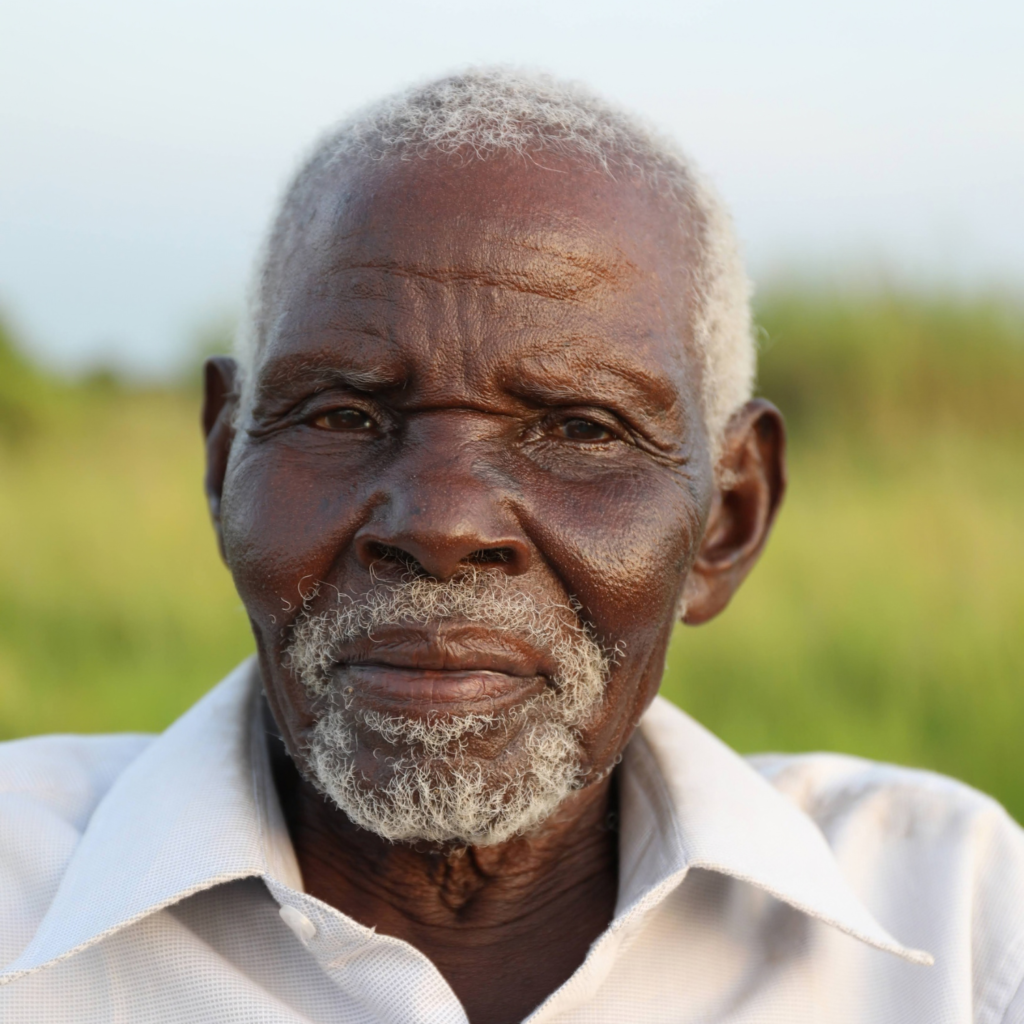
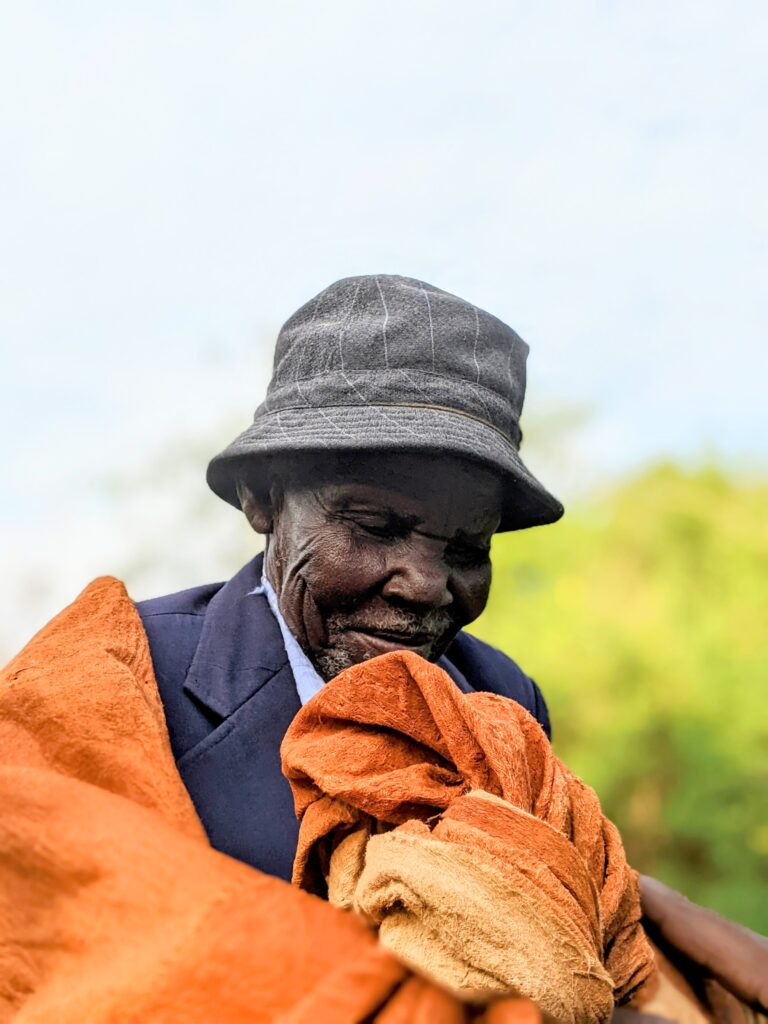
Alon lived on the shores of Itaka Lya Mwitanzig, the great lake (re-named Lake Albert during the colonial period) shared by Uganda and the Democratic Republic of Congo. Already in his 80s, he had begun to gather some of the remaining Bagungu elders and custodians of Sacred Natural Sites (known as Mpuluma). Every few months they met, under the shade of a tree, and recalled the old ways.
For too long, the Bagungu had been told their traditional ways of living were backward, even satanic. Custodians of Sacred Natural Sites, who still held deep knowledge of how to care for nature, known locally as Balamansi – literally, “people who pray for the Earth”, who can interpret messages from the ancestors and from these sites and the land – were often denounced as witches and had to hide away.
At first, only a few Bagungu custodians were willing to gather. They were afraid to talk about the old ways or share their knowledge. Traditionally, the Balamansi conducted prayers and rituals on behalf of the community for healthy lives, good harvests, rain, and vitality of the land and the lake for all species. Most of the prayers and rituals took place in or near Sacred Natural Sites, which form a network across the territory. Rituals would include offerings such as indigenous seed.
“I used to do rituals, giving seeds to the Mpuluma and the lake when my clan would bring the seeds to me. Now clan members no longer have the traditional seeds. How can I take seeds bought from the market, or those supplied by government to Mpuluma? The ancestors will not accept them, they will disturb the site.”
Alon Kiiza
In his dream, Alon foresaw a time when many Bagungu elders and custodians would gather. And so they did! They began to meet more often to discuss how to revive sacred natural sites, the required rituals, indigenous seed diversity and Bagungu ways of life so the land and the lake could thrive again.
Alon dedicated his final years to guiding the Bagungu community to restore their Sacred Natural Sites, revive their rituals and clan structures, and document their customary laws – something we captured in ‘Custodians of Life’ (2020), a mini-documentary on the revival work of Uganda’s Bagungu community:
As age began to catch-up, we were able to provide Alon with some basic comforts, thanks to a generous anonymous funder: a roof over his head, a warm bed, nutritious food, and medical care when needed.
He’s a beautiful soul. He’s the only elder left who remembers how to perform a significant sacred natural site ritual that he said would bring calm and balance to protect the land. (Liz Hosken, Gaia Co-Director).
In December last year, Alon passed on to the ancestral realm. It was one of those moments that you know is coming, but you pray that there will be more time for his deep knowledge to be passed on; knowledge of the lake and land, the customary laws, the rituals for safeguarding sacred places and the ancestral territory.
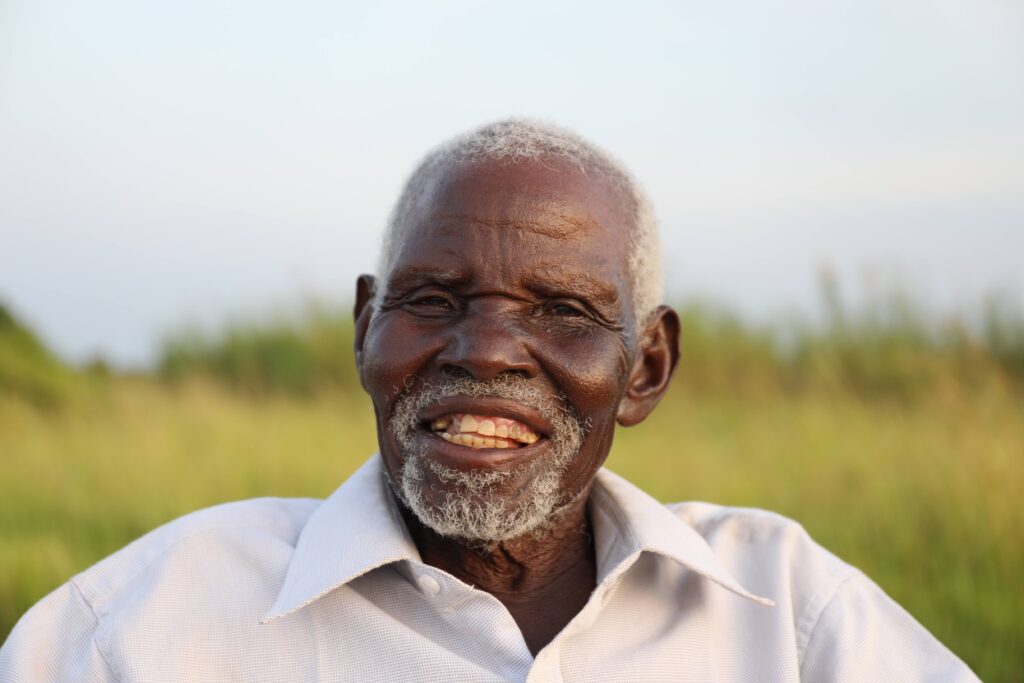
The loss of such African elders is the loss of libraries of lived experience, of cultural memory and identity and of a profound understanding of our place in the web of life.
We mourn the loss of Alon, and of other brave custodians such as Kagole Margret Byarufu, from Uganda’s Lake Albert basin – a region that is being devastated by oil exploration and production. We will miss his profound wisdom, guidance and passion for healing the land and the community.