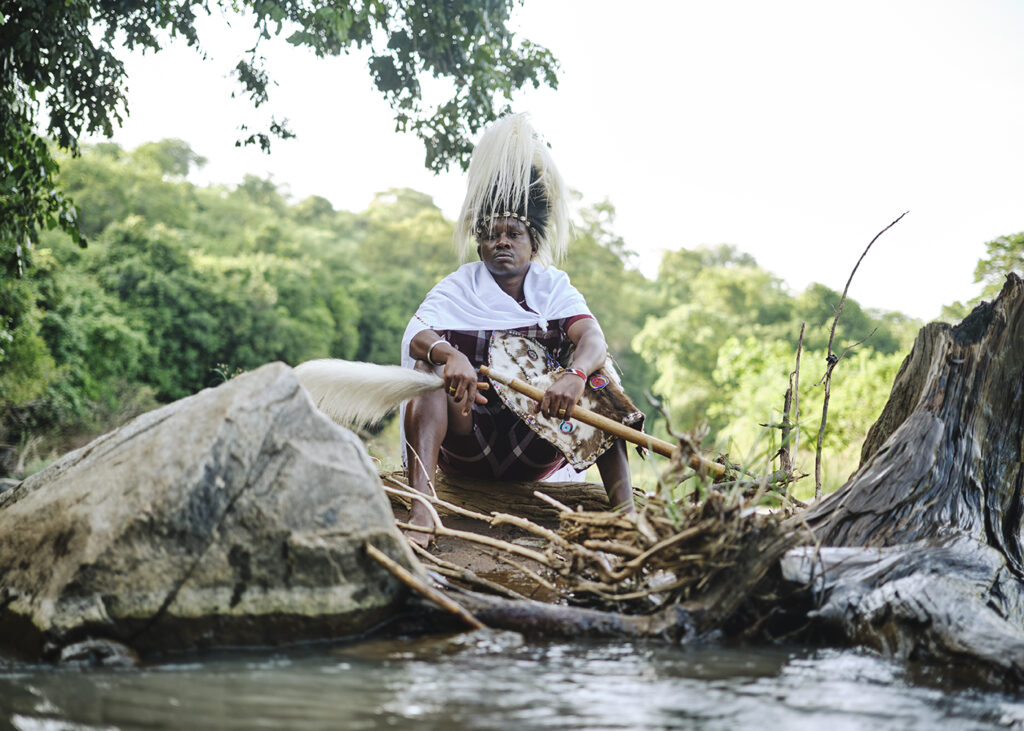


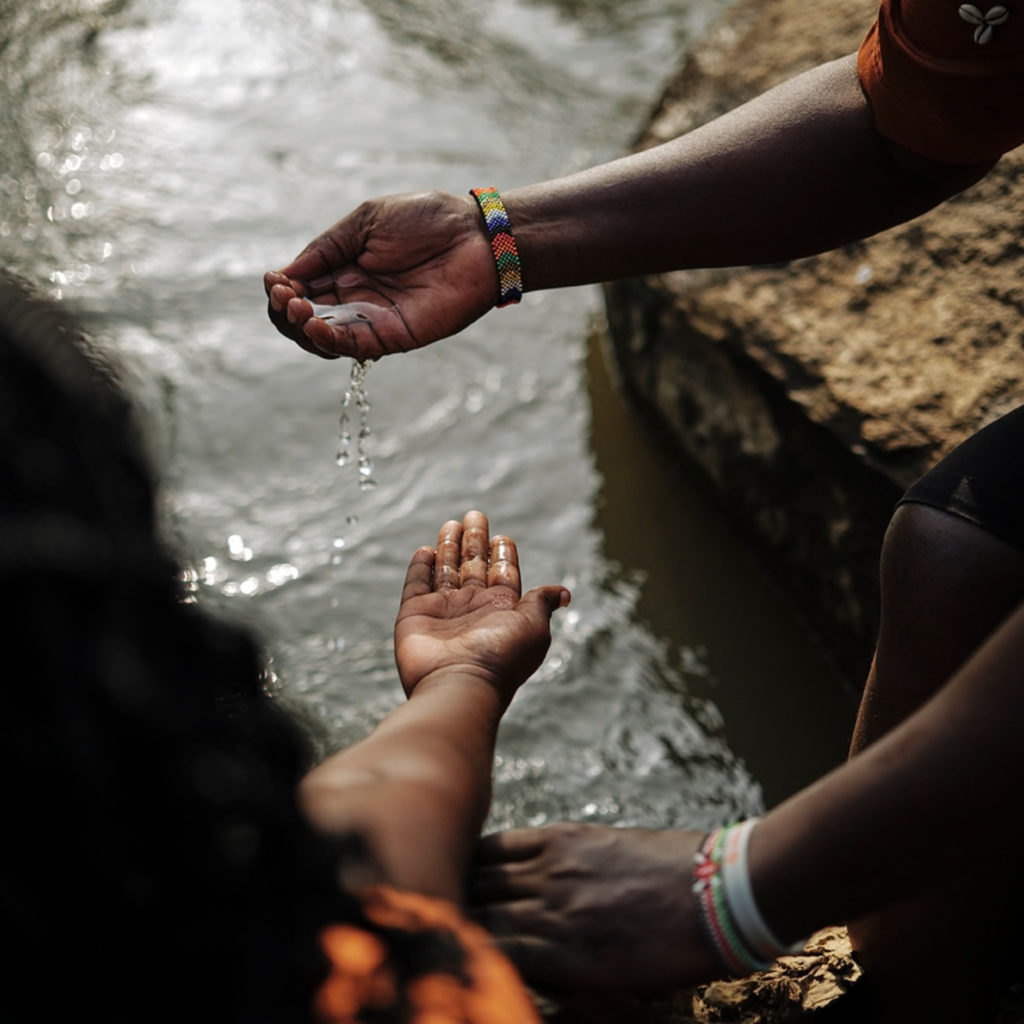
The Tharaka community from the foothills of Mount Kenya are the first in Africa to create Life Plans, as part of an eco-cultural mapping methodology learnt from the Colombian Amazon. When The Gaia Foundation‘s roots were forming in the 1980s, Indigenous people were dreaming of ways of illustrating their holistic relationship with their Amazonian territory, leading to their recognition as stewards of eighteen million hectares. Their journey has been shared by Gaia with the African Earth Jurisprudence Collective over the years, leading to joyous eco-cultural mapping processes in South Africa, Uganda, Zimbabwe, and Kenya.
Seeds are first sown in elder-centred dialogues, where pre-colonial memories are recalled through slow, gentle sharing. When their ancestral knowledge and practices are coming back to life, the community create an eco-cultural map of their past: a participatory way for the community to consolidate their wisdom. As pictures bring their ancestral territory back to life, more memories are triggered, and their map of the past becomes a baseline. An eco-cultural map of the present follows, charting the disorder initiated by colonialism and all that has followed. Finally, an eco-cultural map of the future captures a collective vision – informed by the map of the present and inspired by the map of the past – for a world in which the autonomy, abundance, and health of Tharaka’s humans and more-than-humans is restored.
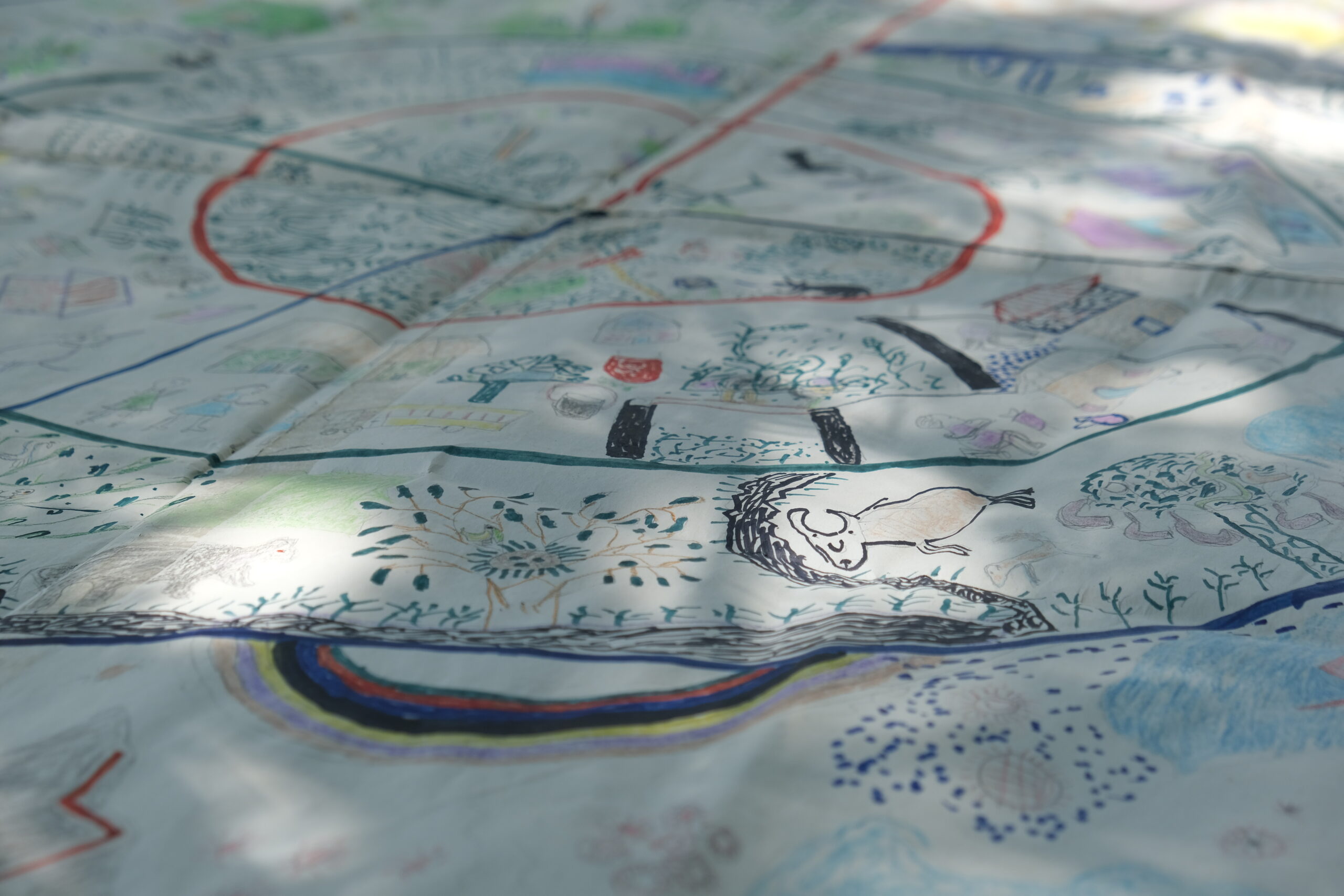
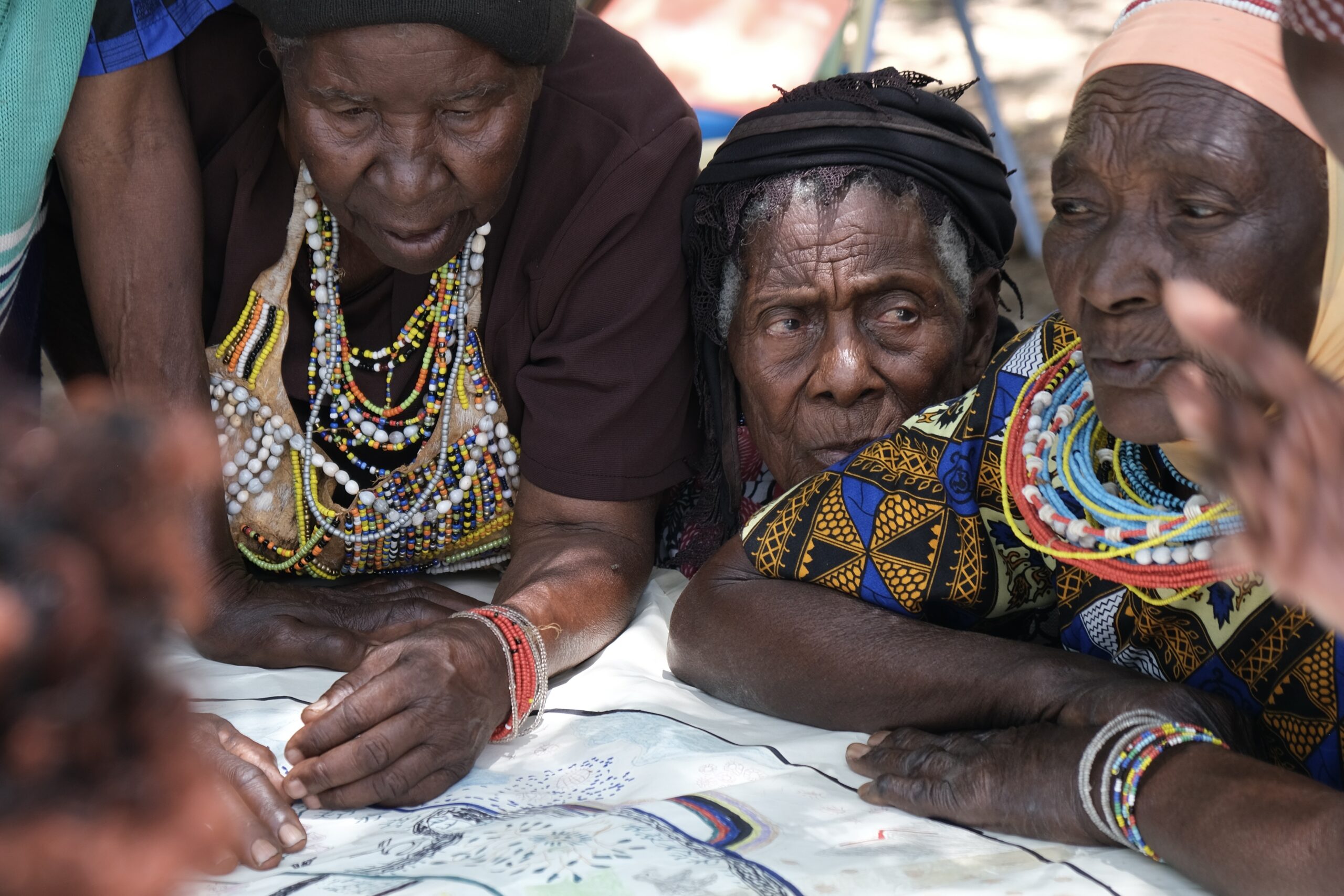
These maps of the territory in space are accompanied by maps of the territory in time. Seasonal calendars track the community’s shared consciousness of change as their world turns through the year, including constellations, weather, moon cycles, changes in the landscape and signs for when to plant, harvest, hunt, forage and initiate rituals.
Having united around their eco-cultural maps and calendars, communities develop Life Plans: asserting with confidence how they will build on what they are already doing to reach their map of the future, and leave a legacy of biocultural revival for the next generation beyond their lifetime. In Tharaka, clans gathered to draw these Life Plans over the course of a week. What emerged was their own ‘River of Life’, inspired by the Kithino River they live alongside.
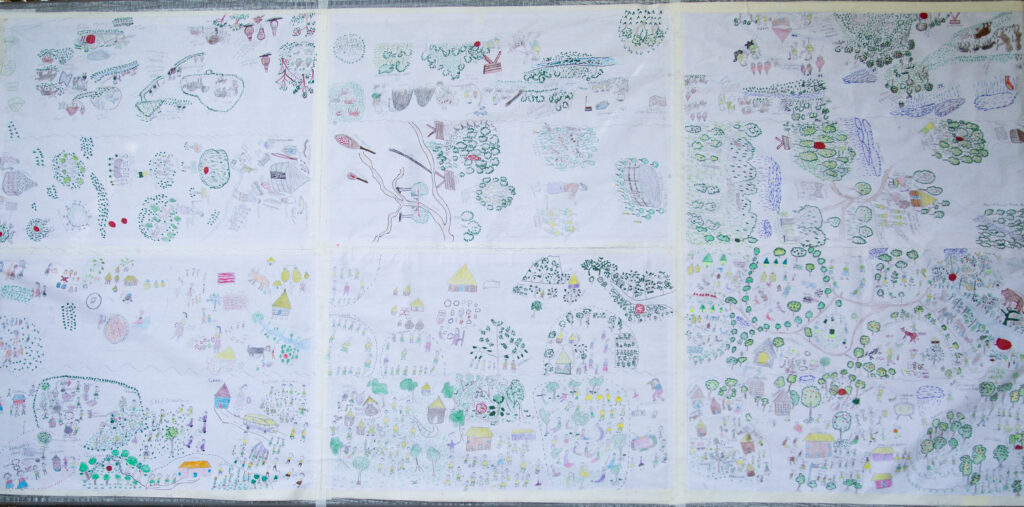
Into this River of Life flow streams of specific work, including the revival of indigenous seed diversity, traditional grazing, customary crafts, sacred natural sites and rituals, eco-centred governance, and intergenerational learning. The river would be empty without these streams, just as the streams would come to nothing without flowing into the wider river: distinct but interdependent areas of revival, weaving together to bring Indigenous Peoples’ complex cultural and ecological systems back from the brink of extinction.
REVIVING THARAKA’S RIVER OF LIFE:
STREAM OF SEED
Salome Gatumi, elder and Seed Custodian
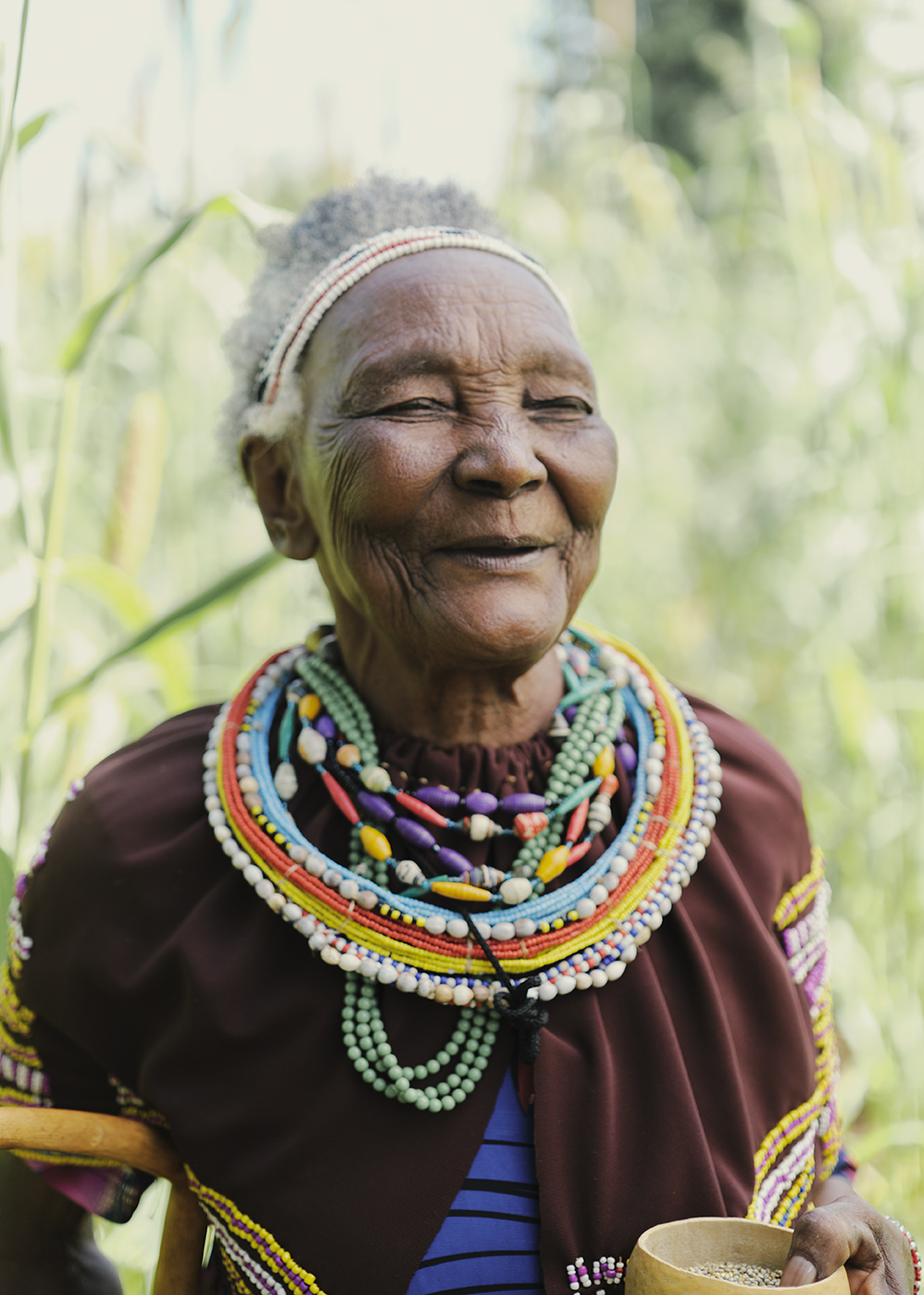
Hybrid seeds are being promoted to us, because they make businesses money. We were losing our own seeds to these new varieties, which require chemicals at every stage: for planting, growing and storing. Any money you get from the sale of the crops ends up paying for more chemicals. And every variety needs its own type, like you need to spray genetically modified maize with the right chemicals for maize.
Where is the benefit from hybrid seed? You are farming for the corporations, not yourself.
The revival of our seed began when Simon told us the story of the Amazon. Once we knew Indigenous Peoples from other countries thought the same as us, we decided to restore our own traditions.
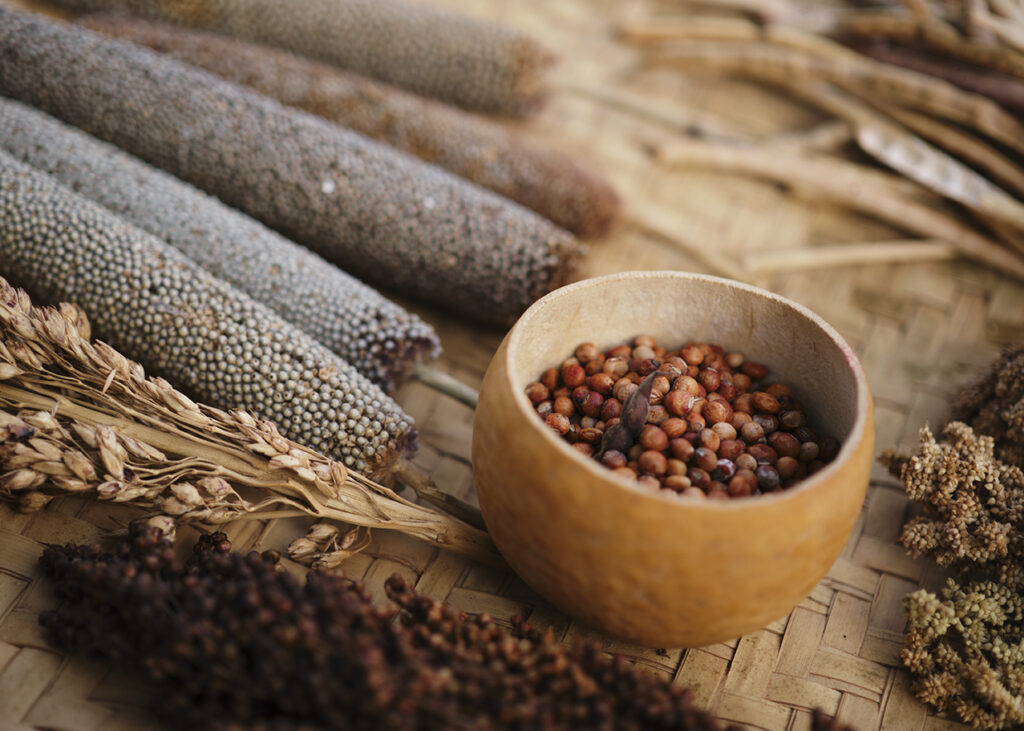
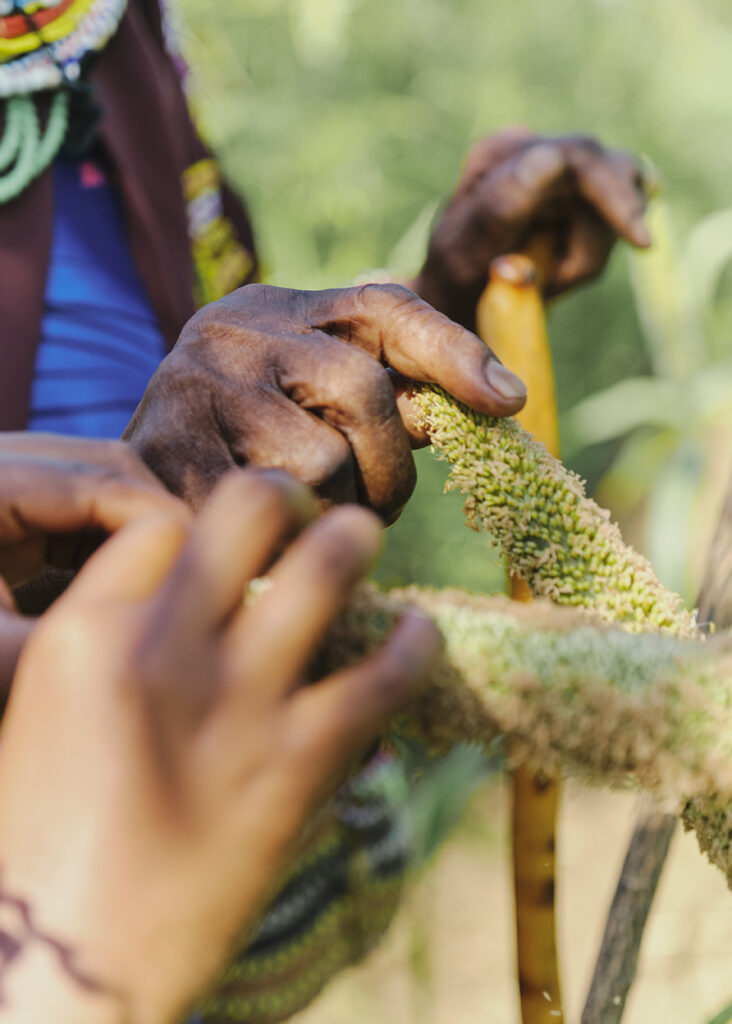
We rediscovered canton melon, cow peas, millet, and many varieties of sorghum like muchuri and mucharama. When we harvest, we select the best seeds to grow the next season and share them with more women, so our collective efforts expand and we have autonomy over our food security.
These seeds were born in this soil, so they know how to adapt to our climate.
We live in the land of the sun, and even when there is not enough rain, seeds from Tharaka still flourish and we have a harvest.
Tharaka seeds are best for our climate but also for our bodies, for our bees, and for our customs.
If you grind hybrid and traditional millet, there is a big difference. For example, before a ritual, people give a little, a little, a little, and when there are enough seeds, we grind them and mix in honey to make Ita, then leave this on the fire overnight. Before sunrise a young child takes the Ita to the elders before they perform the ritual. When I was a child, I used to do that job. There is no ceremony without our Indigenous seeds.
STREAM OF CRAFT
Simon Mitambo, elder, Earth Jurisprudence Practitioner and Co-Founder of SALT
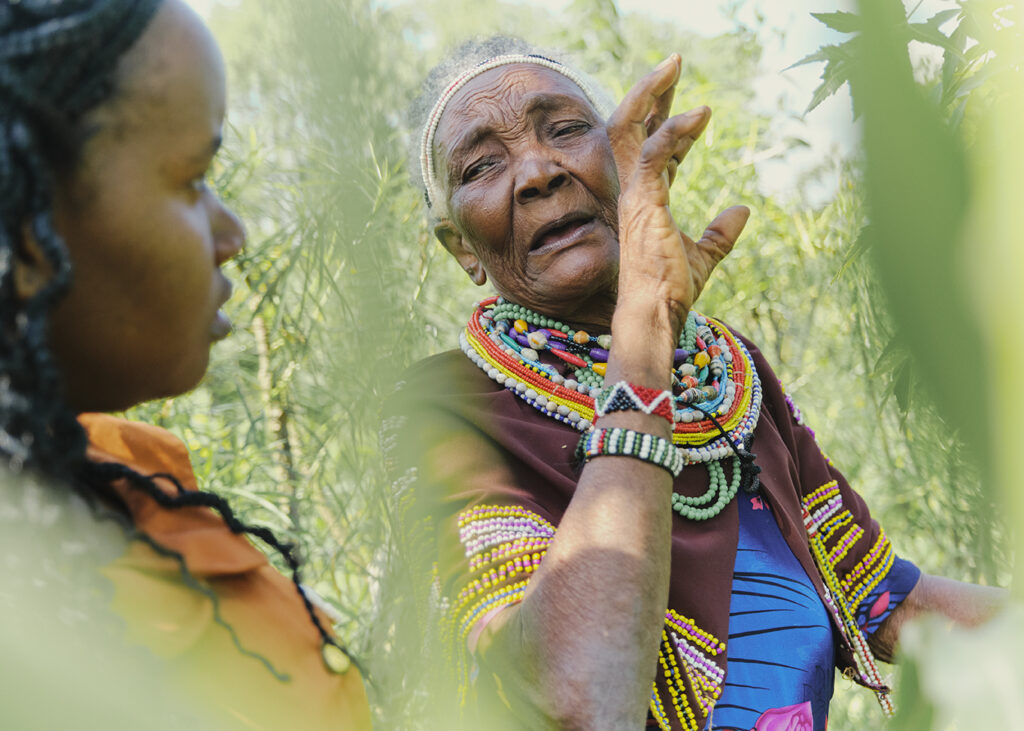
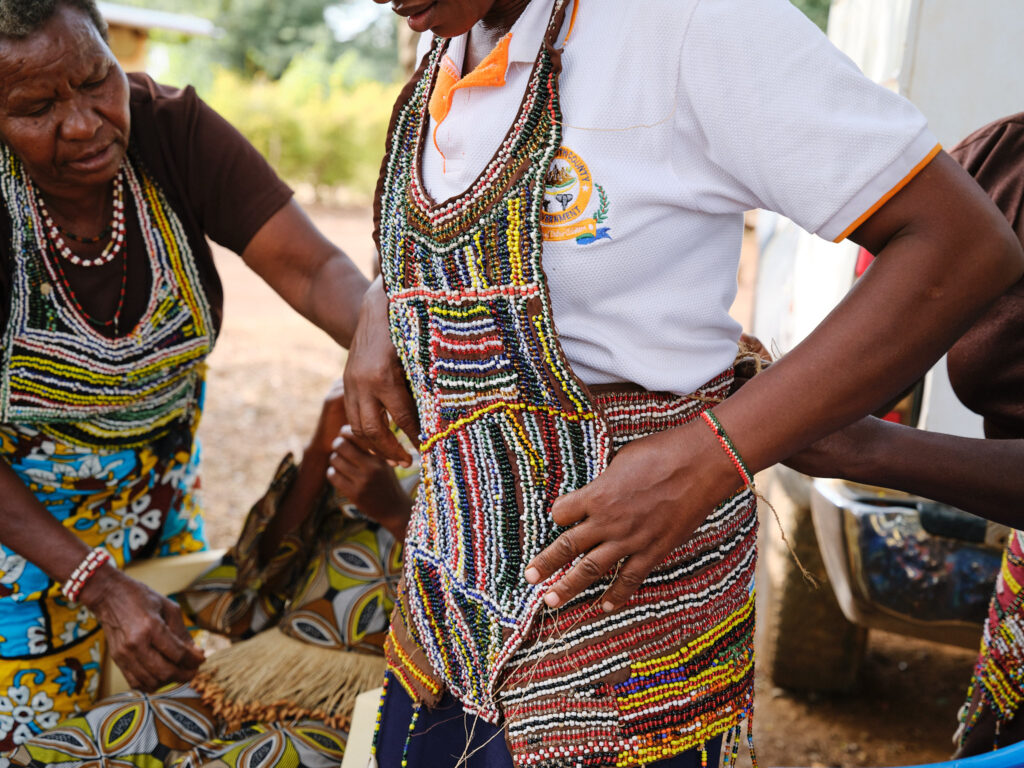
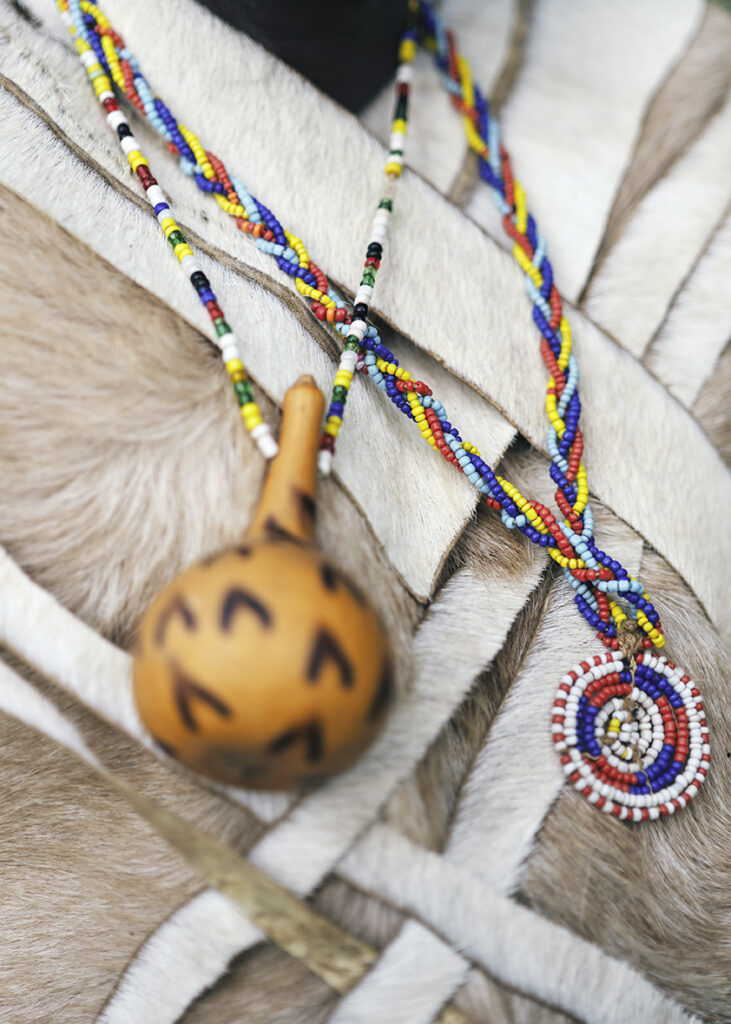
Another significant aspect of our work involves revitalizing traditional crafts. Women have returned to weaving and beading, creating culturally significant jewellery and dresses.
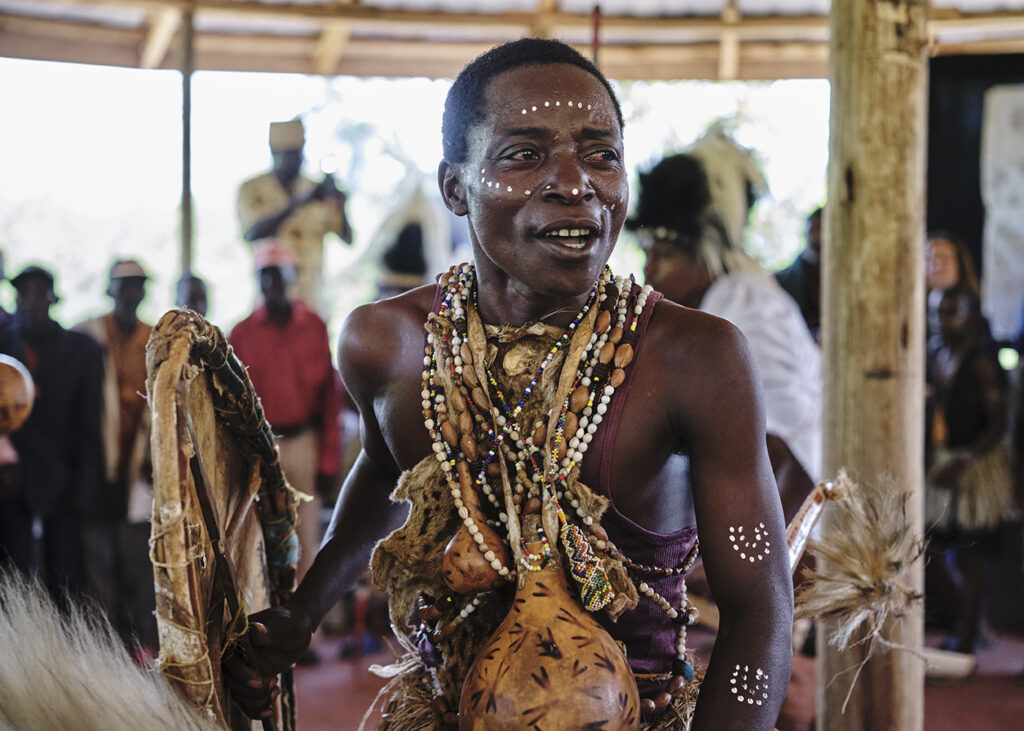
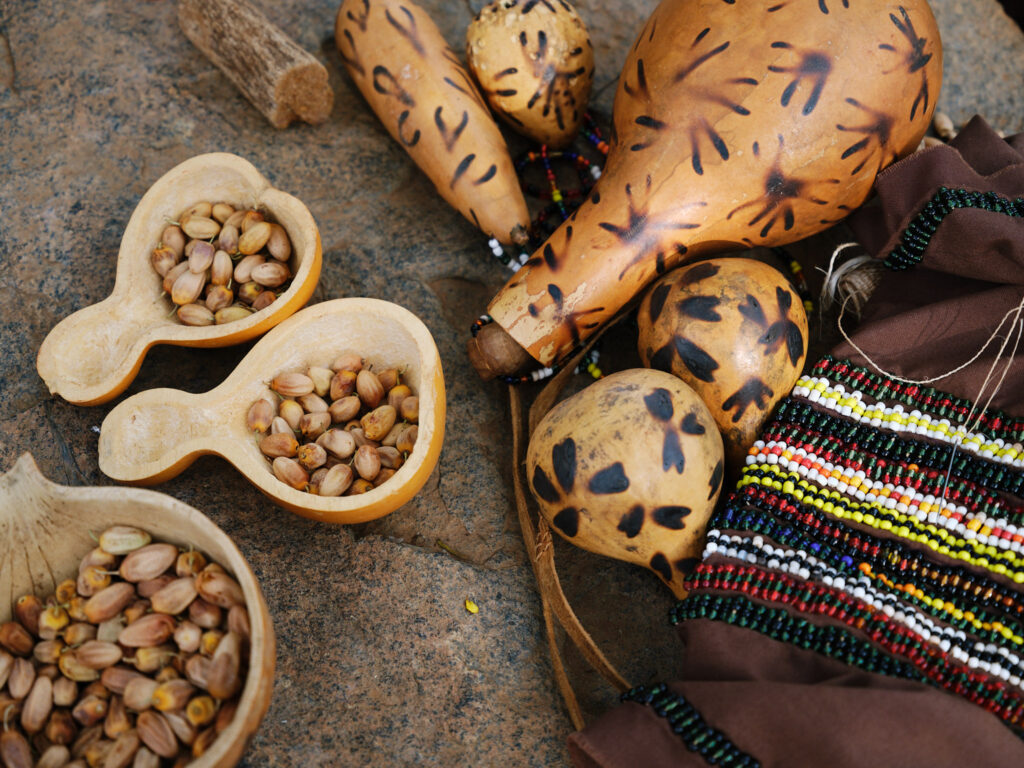
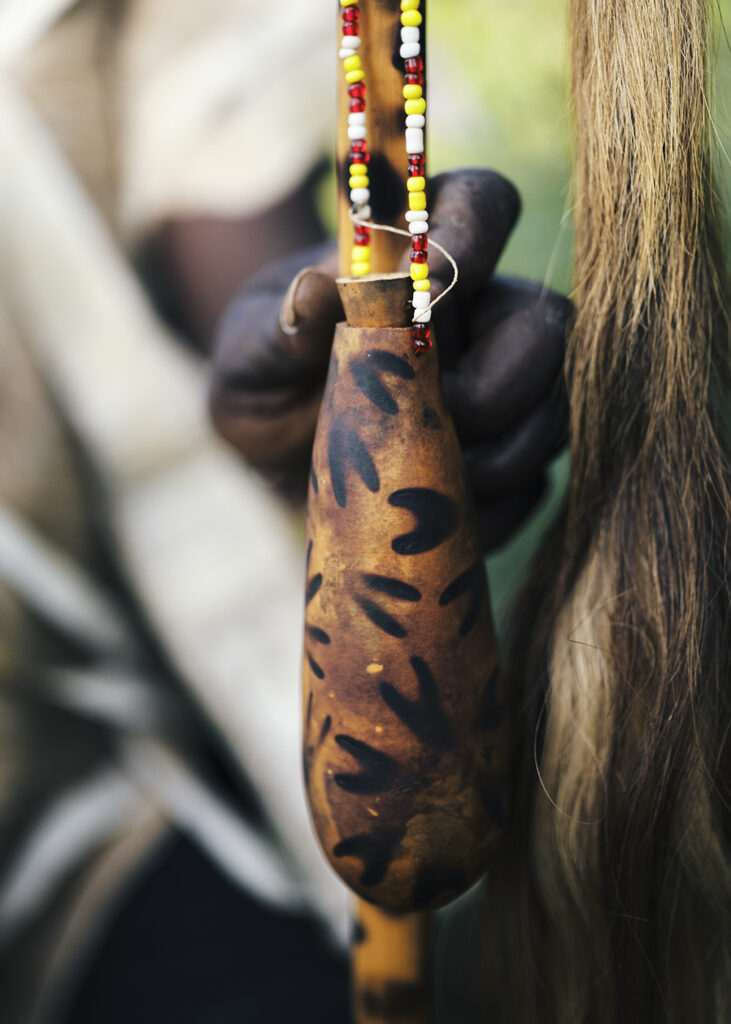
Men traditionally focus on basketry, as well as making calabashes. These vessels are formed from dried gourds and decorated with irons from the fire, then used for storing seed, brewing honey beer, and eating or drinking.
Calabashes replace plastic imports with entirely organic, local materials that can be returned to the Earth.
These crafts not only preserve our own cultural identity and provide us with utensils, clothes, and jewellery, but they also generate income for families instead of selling crops, giving us nutritional security.
STREAM OF GRAZING
Mbura M’Rugia, elder
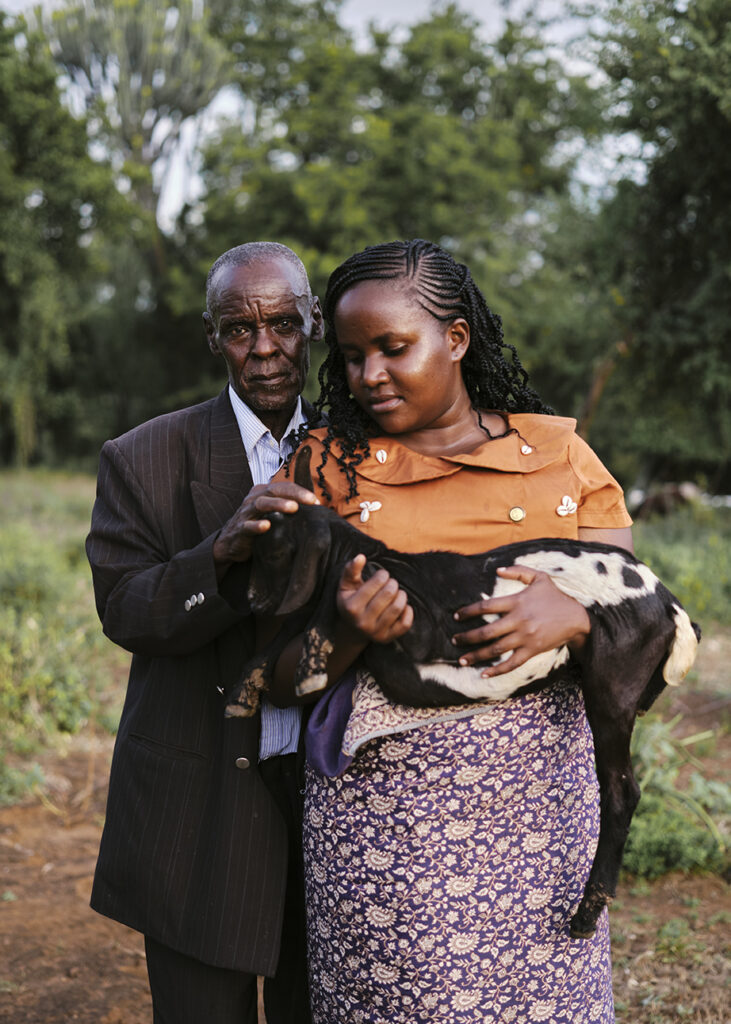
I have grown up with the culture of Tharaka, and learnt from my father.
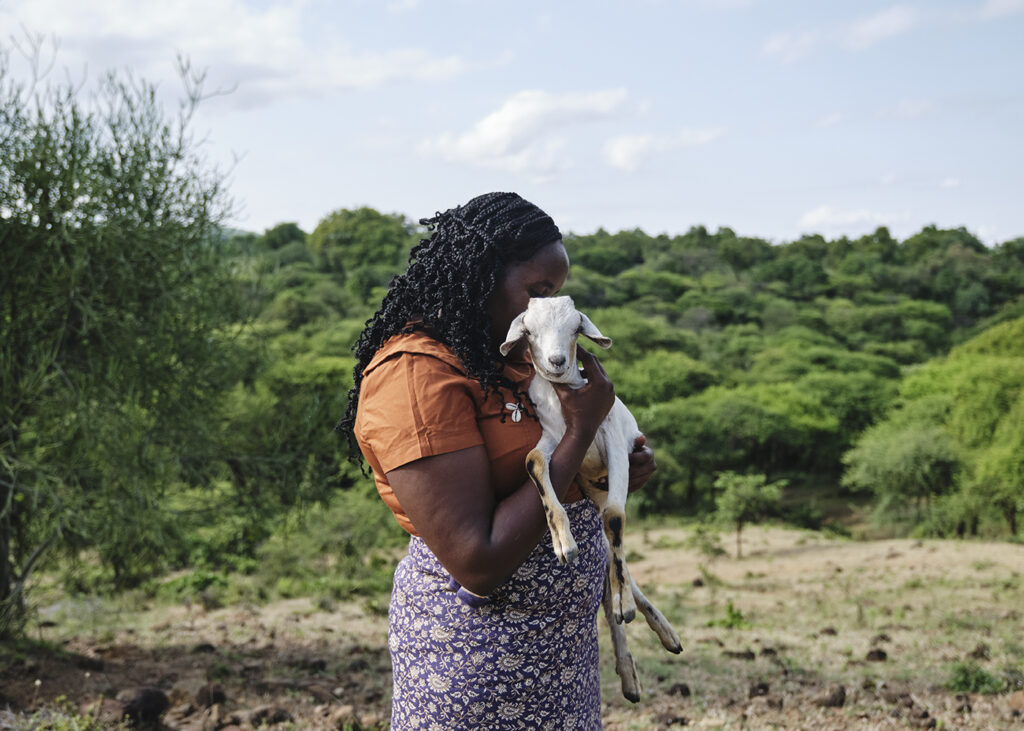
Traditionally, we grazed goats in a rotational system that allowed the land to rest.
If I compare this to how people graze goats today, I see so many differences. We do not share as we used to. Now, people graze their own animals on private property.
When our communal fields were divided by colonisers, our people were divided too.
Not all land is the same, and this inequality has caused conflict in our communities. Small portions of land cannot sustain grazing for long, and you have nowhere else to go.
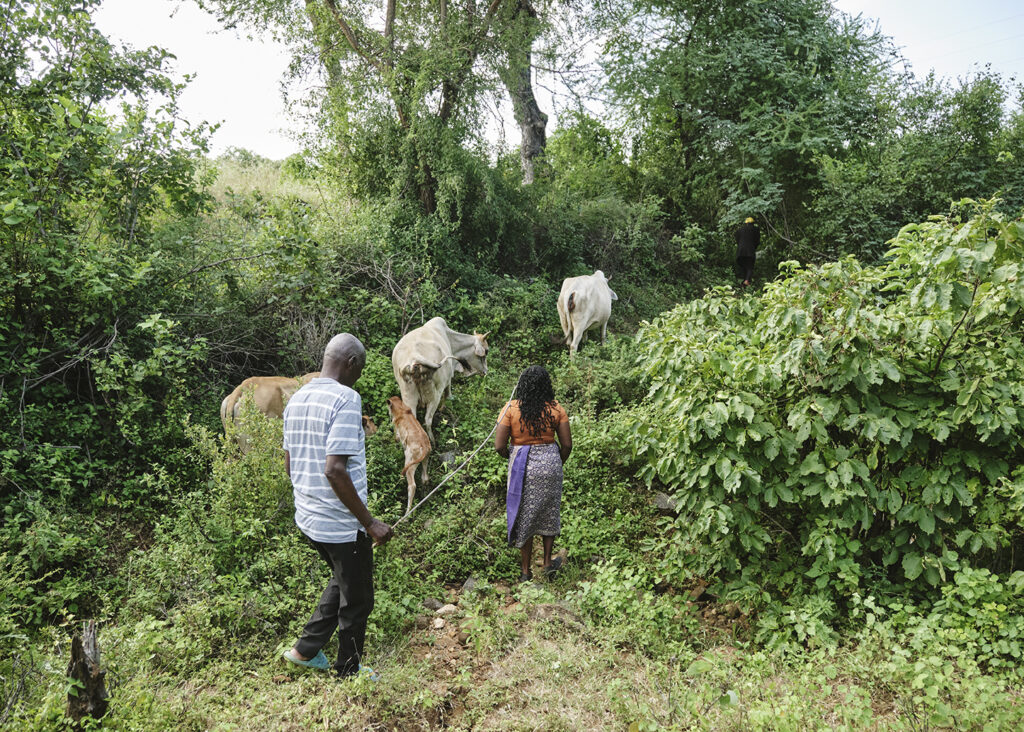
We are reuniting with our neighbours, so we can bring our animals and lands back together in a traditional system called Marithia: shift grazing. For example, I graze all the animals on my land for four days, then pass the herd onto my neighbour for the next four days, and so on. By the time the herd returns to me, both I and the land have rested.
The other benefit is genetic diversity. In a mixed herd, my cow can breed with my neighbour’s bull. They are just like people: it is not healthy to interbreed within their own families.
The shift system also offers us resilience against an increasingly extreme climate.
During drought, my neighbour can graze my goats at the watering point on his land. During heavy rains, the whole herd can move to my fields for shelter.
We reciprocate the gifts of water and shelter from the land by replanting indigenous trees. Before we started grazing in this way there were very few left, but when the goats can roam, they eat wild fruits and seeds return to our farms through their manure. At my home here, you can see a lot of trees growing because of this, like Mbobua, Nthwana, Mikao and Tamarind.
If we can graze communally, we can have unity, love and friendship.
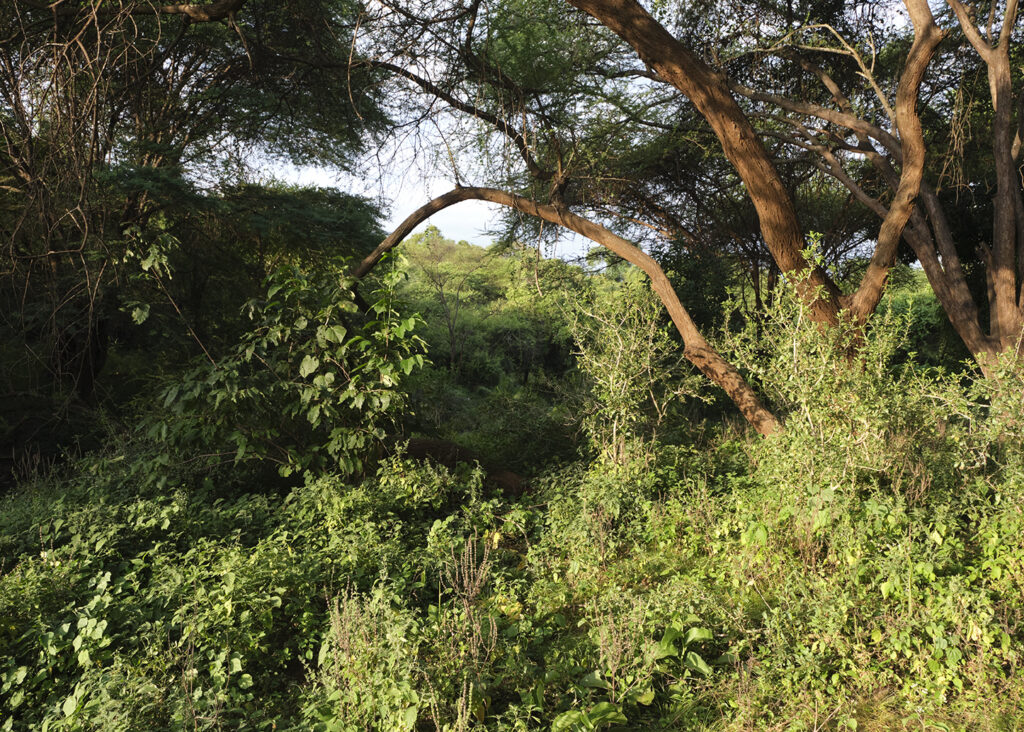
STREAM OF SACRED NATURAL SITES
Young Mugwe, spiritual leader
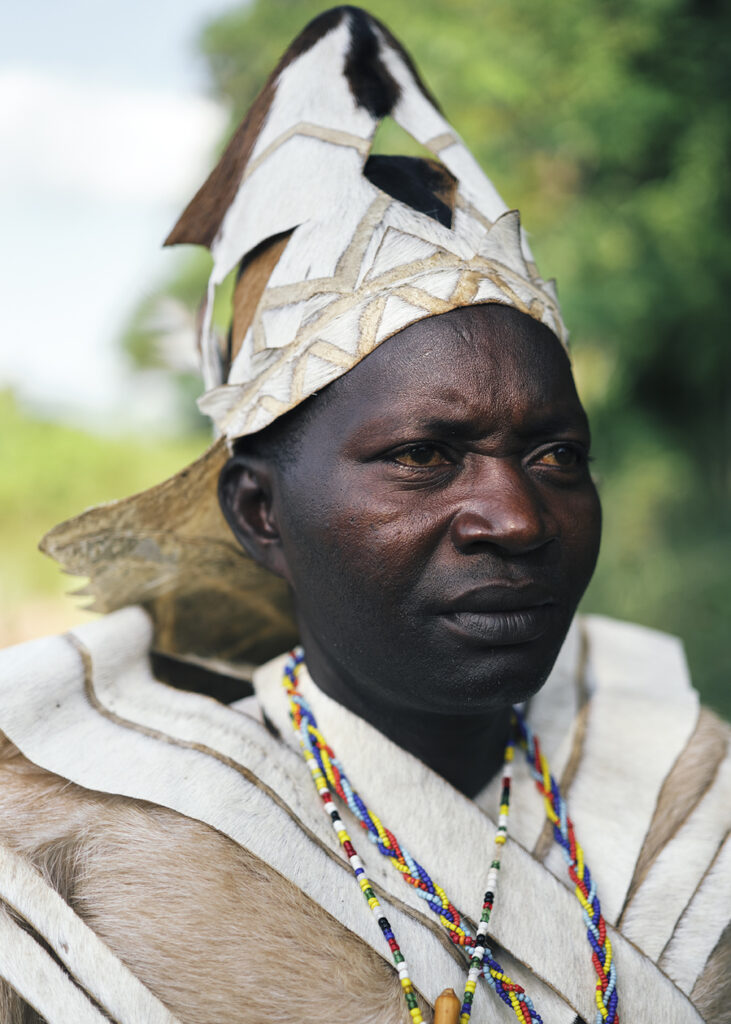
Sacred Natural Sites are precious points in the body of the Earth, cared for by custodians. We learn about their location from the generations that came before us.
There are sites along the rivers, in the mountains and in the forest, where ancient trees still stand because they have been protected by Indigenous Peoples for millennia.
Sacred Natural Sites are homes for our ancestors, alongside all the other wild animals. There are snakes and grasshoppers, black ants and bats who live in, and look after, these places.
We share Sacred Natural Sites with all beings, and coexist in many ways.
For example, when there are no rains in Tharaka, elders perform rituals that bring rains to heal the land. We reciprocate by gifting a goat. These Sacred Natural Sites are where we can be united with our ancestors and nature, to restore balance between us.
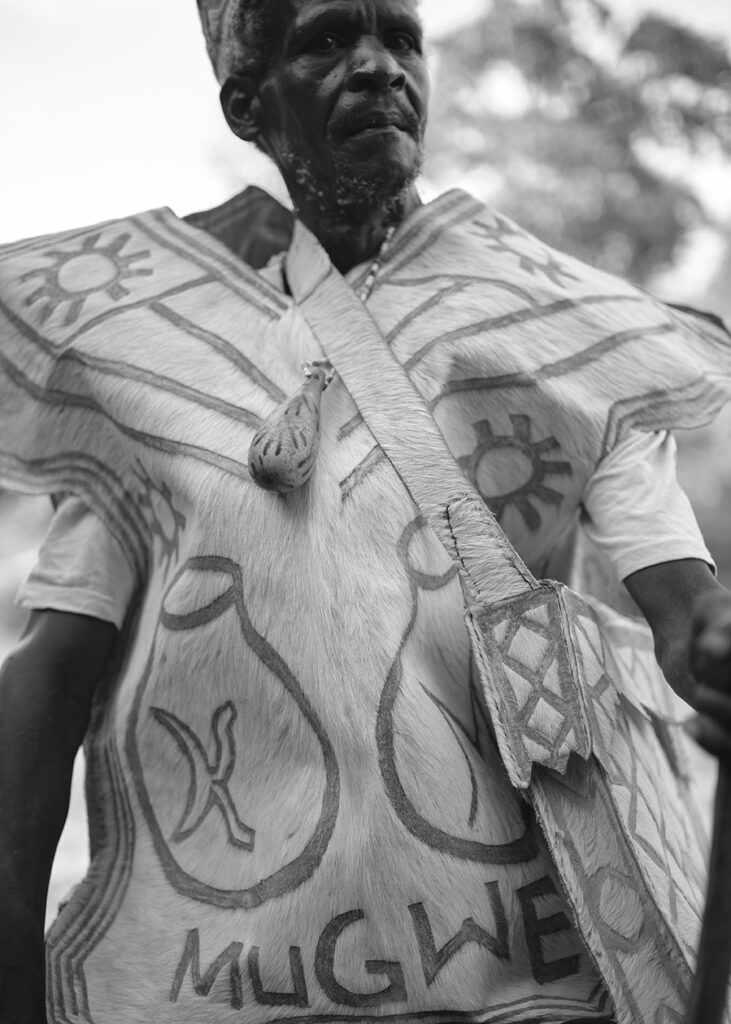
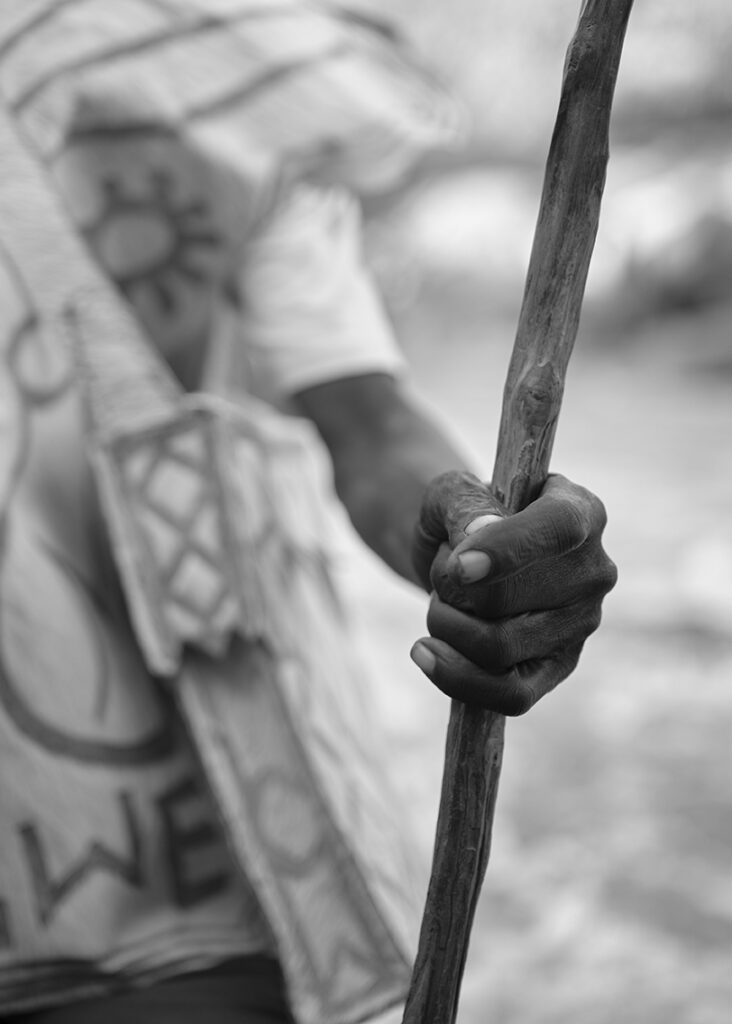
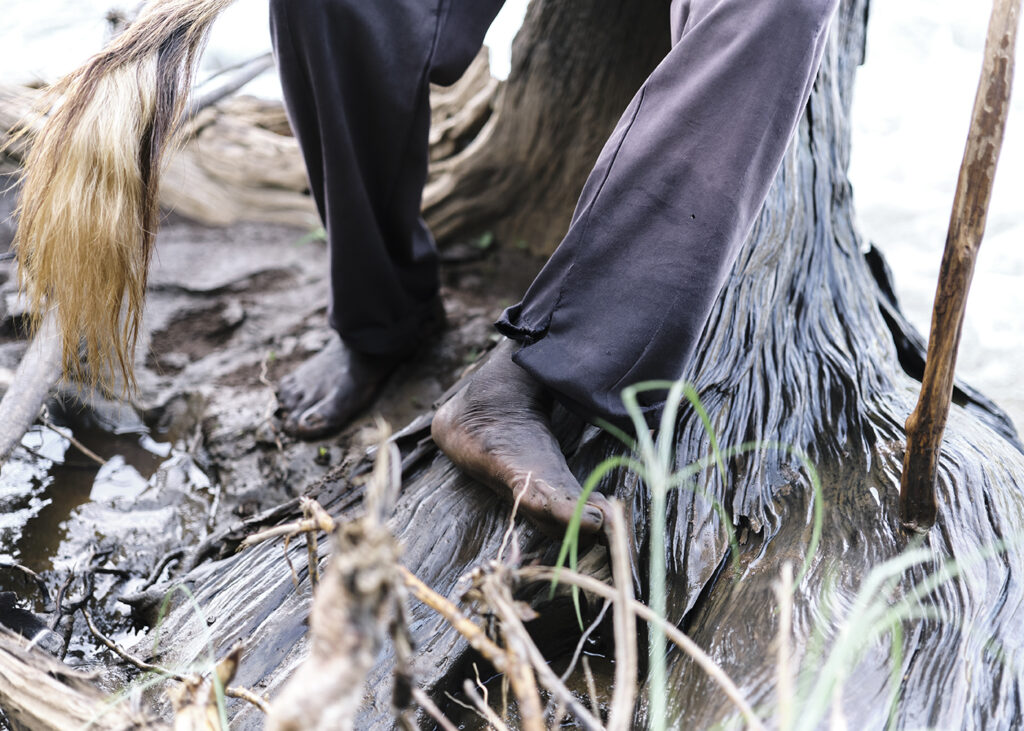
Our customary, eco-centred governance protects them. For example, you are not allowed to wear shoes into a Sacred Natural Site. You are also not allowed to cut down trees, or hunt, or graze goats.
Like living monitoring systems, their current state shows how our world is changing. Christians have often seen them as demonic, and they are desecrated as a result.
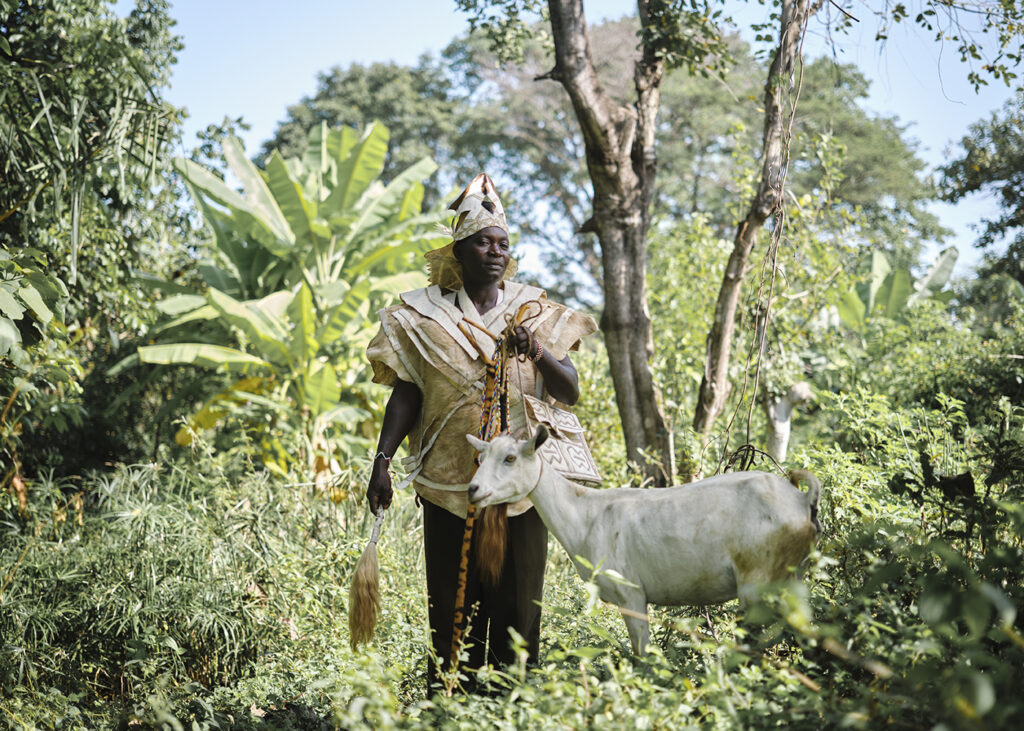
Now the strength of our spirit is protecting them again.
We are reviving our customary laws, putting up signage, and involving young people; once they understand that Sacred Natural Sites are no-go zones, they respect the law. Teaching the next generation is so important because they will become the custodians of these lands and waters after we have gone.
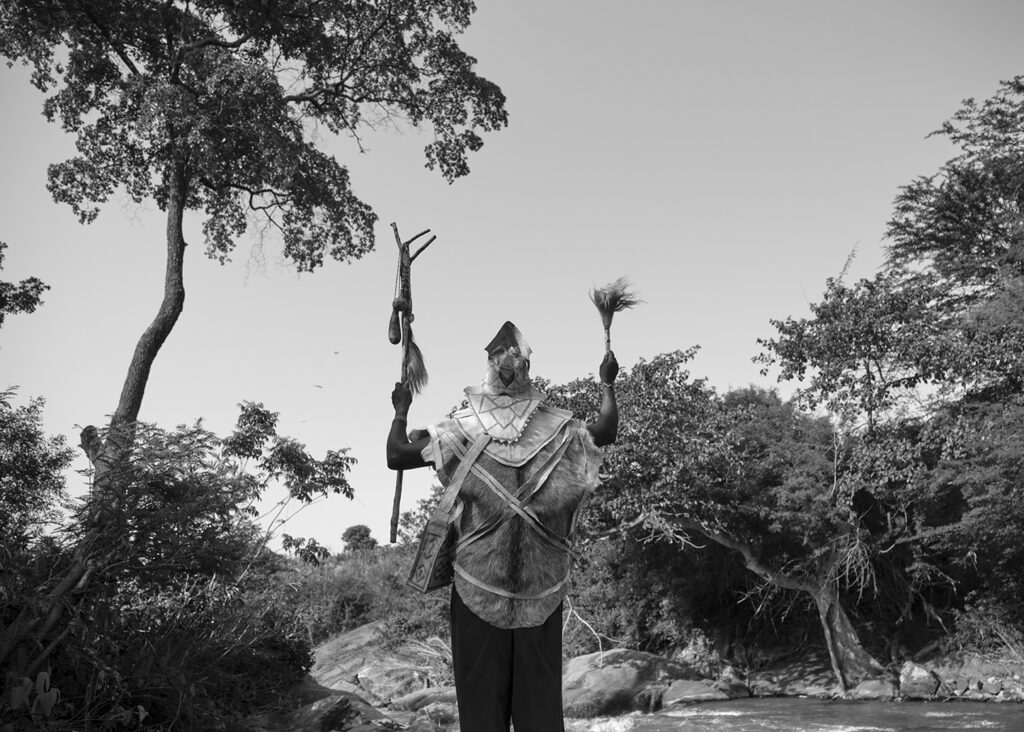
STREAM OF INTERGENERATIONAL LEARNING
Simon Mitambo, elder, Earth Jurisprudence Practitioner and Co-Founder of SALT
As we work to revive our Sacred Natural Sites, we are also taking steps toward strengthening traditional governance.
The cornerstone of my community has always been the Gaaru.
This special meeting place, located near a Sacred Natural Site, serves as a place for teaching, initiation rites for young people, and councils of Elders, as well as representing a center for community ecological governance and cohesion.
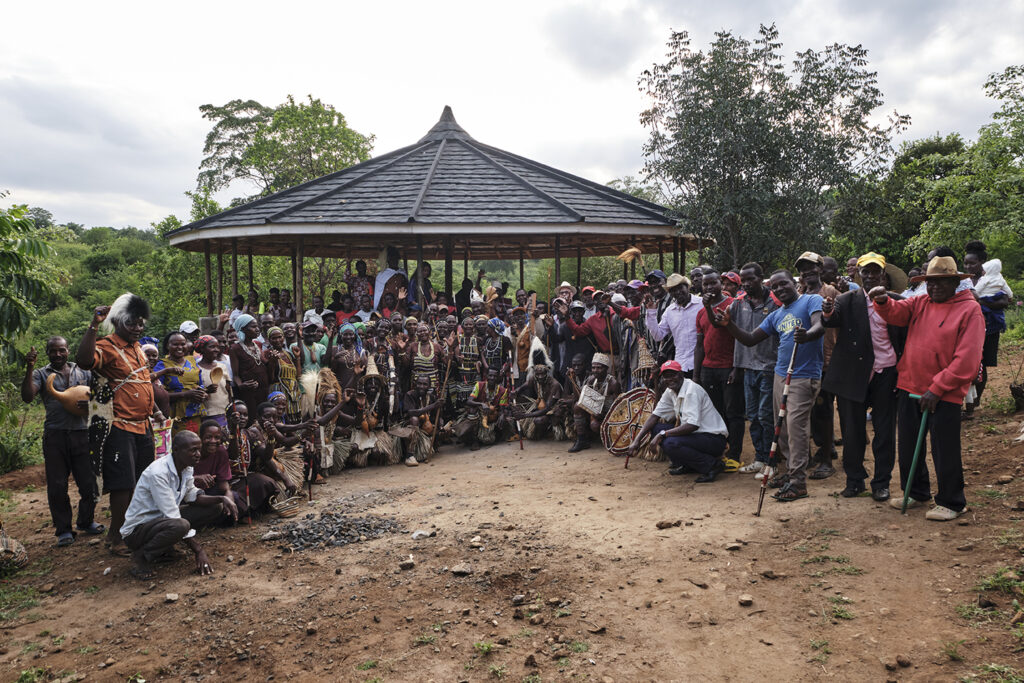
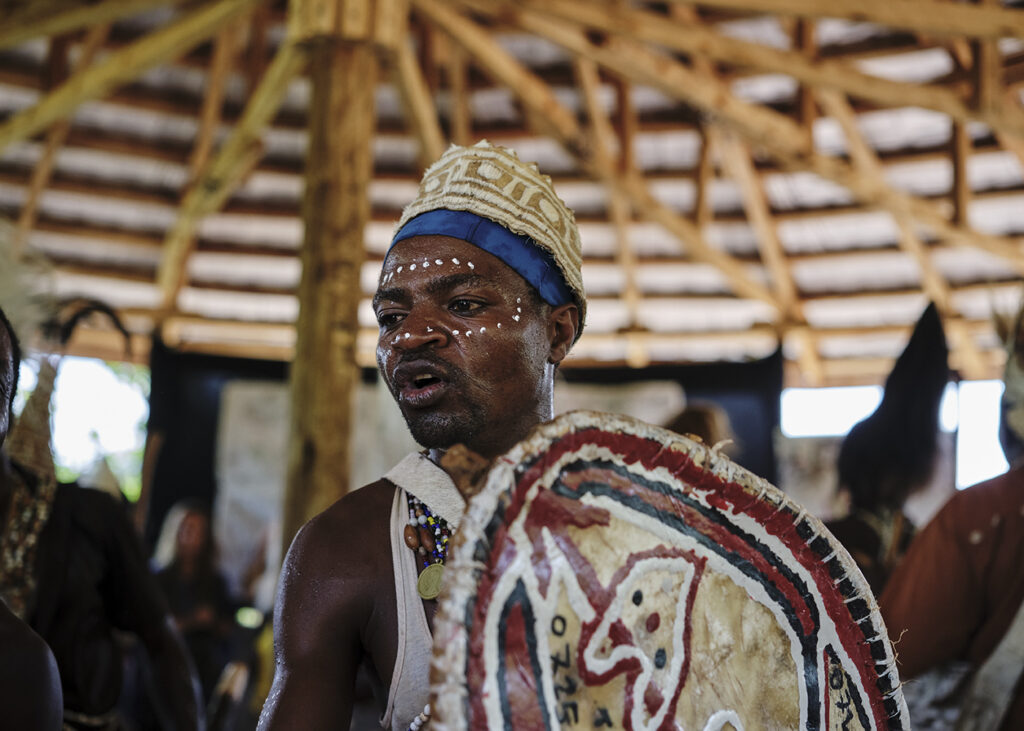
We had to rebuild the Gaaru and bring back its importance. Our structures, both the physical and the spiritual, had broken down, leaving us fractured.
Now, the Gaaru is where young people learn the customary laws of the land during their rites of passage. The Elders guide them in understanding how to care for the territory, just as I experienced growing up.
The Gaaru ensures that governance is grounded in our cultural values of respect and love for collective well-being of Mother Earth.
It brings clarity, providing a practical framework steeped in tradition and able to respond to new challenges from a stable root.
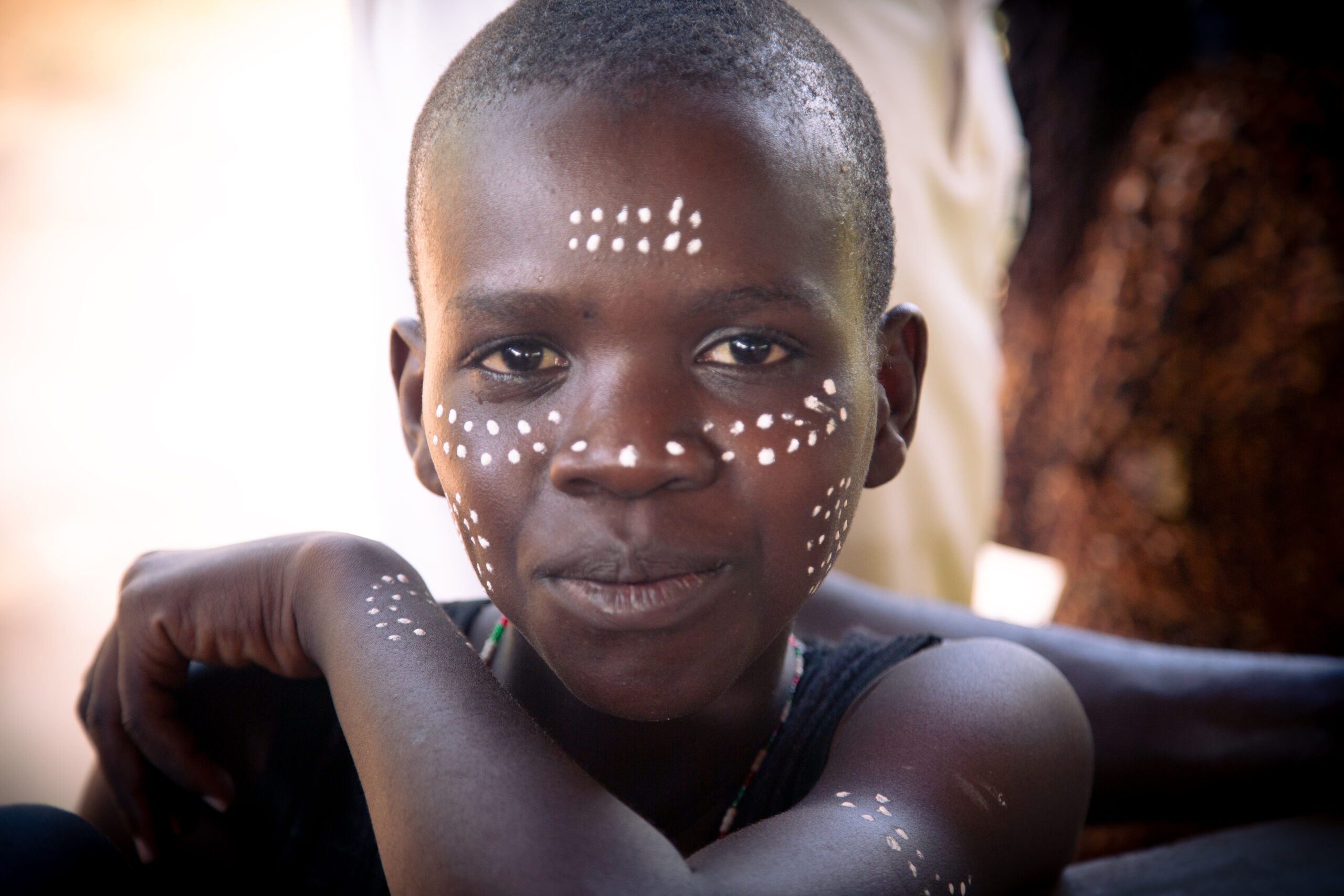
Wherever Indigenous Peoples choose to begin their cultural and ecological revival, ultimately, they reweave holistic ways of life that revere and protect the Earth from which life stems. In Tharaka, this has already borne out. The River Kithino, who inspired the drawing of the community’s own River of Life, drains its water into Mutonga, a key tributary of River Tana which was about to be dammed, supported by multinational financing. This would have obliterated the sacred Kibuka Falls, displaced people from their ancestral homes and forever flooded this ‘Land of the Bees’. As Simon reflects “The government of Kenya wanted to build a dam here. And that dam would have consumed half of Tharaka. Today, we thank our ancestors that the dam was cancelled.” With pride in their past and a collective vision for the future, this community have the strength to follow their River of Life to fruition.